If you are a Houston homeowner wondering whether your chimney is safe, efficient, and ready for use, a chimney inspection service in Houston, TX is the most practical first step you can take. Whether your fireplace has been sitting unused for months, you have noticed an unusual smell near the hearth, or you simply have not had the system checked in a while, a professional chimney inspection gives you a clear picture of what is happening inside your chimney — from the cap at the top down to the firebox at the bottom.
Estimated Reading Time: 12 Minutes
Key Takeaways
- Annual chimney inspections are recommended even if you rarely use your fireplace — moisture, animals, and structural decay do not depend on usage.
- Houston’s high humidity and heavy rainfall accelerate masonry damage, rusted components, and moisture infiltration inside chimneys.
- There are three recognized levels of chimney inspection, each suited to different circumstances including routine checks, real estate transactions, and concealed damage evaluation.
- A standard home appraisal does not replace a professional chimney inspection — Level 2 inspections are recommended when buying or selling a home.
- Gas fireplaces also require annual venting inspections to guard against carbon monoxide risks and flue corrosion.
- Choosing a transparent, locally accountable chimney service provider protects you from high-pressure repair tactics and unreliable assessments.
Not sure when your chimney was last inspected? Do not wait for a problem to announce itself.
The Hidden Risks of Neglecting Your Annual Chimney Inspection
An inspection is not just about looking for obvious damage. It is a thorough evaluation of the flue, liner, smoke chamber, damper, exterior masonry, and crown. According to the U.S. Environmental Protection Agency, fire officials recommend having wood-burning appliances and chimneys professionally inspected each year to identify cracks and venting problems that can create fire and smoke hazards. The goal is to catch hidden issues before they become expensive repairs or safety concerns.
Creosote is a sticky, tar-like byproduct of burning wood. Over time, it accumulates along the interior walls of your chimney, and it is highly combustible. A thick layer of creosote can ignite under the right conditions, leading to a chimney fire that may damage the flue liner or, in serious cases, spread beyond the chimney itself. The EPA explains that this buildup significantly increases chimney fire risk, which is one of the primary reasons annual inspections exist.
Beyond fire hazards, a blocked or poorly venting chimney can allow carbon monoxide to back-draft into your living space. Carbon monoxide is odorless and colorless, making it virtually impossible to detect without proper equipment. A professional chimney inspection evaluates draft performance and flue condition to help confirm that combustion gases are exiting the home as they should, rather than accumulating indoors.
For many Houston homeowners, an inspection also determines whether professional chimney cleaning is needed to remove combustible deposits like creosote and soot.
A Scenario Most Houston Homeowners Overlook: Humidity and Weather Damage
Houston is not known for harsh winters, but the local climate presents its own set of challenges for chimney systems. High humidity throughout the year, combined with heavy rainfall, creates persistent moisture exposure. According to National Weather Service data for Houston, the area receives substantial annual rainfall, and humidity levels remain elevated for most months. This constant moisture works its way into masonry joints, the chimney crown, and metal components like dampers and flashing.
Over time, moisture causes a condition called spalling, where bricks absorb water, freeze or expand, and begin to flake apart. Rusted dampers may fail to seal properly, allowing outside air, water, and even insects into the flue. A chimney inspection in Houston should always account for these moisture-related issues because they can progress quietly until significant structural damage has already occurred.
Did You Know?
Efflorescence — the white, chalky staining you sometimes see on exterior chimney bricks — is a visible sign that moisture is migrating through the masonry. While it may look cosmetic, it often signals deeper water penetration that can compromise the chimney’s structural integrity over time.
What Happens During a Professional Chimney Inspection?
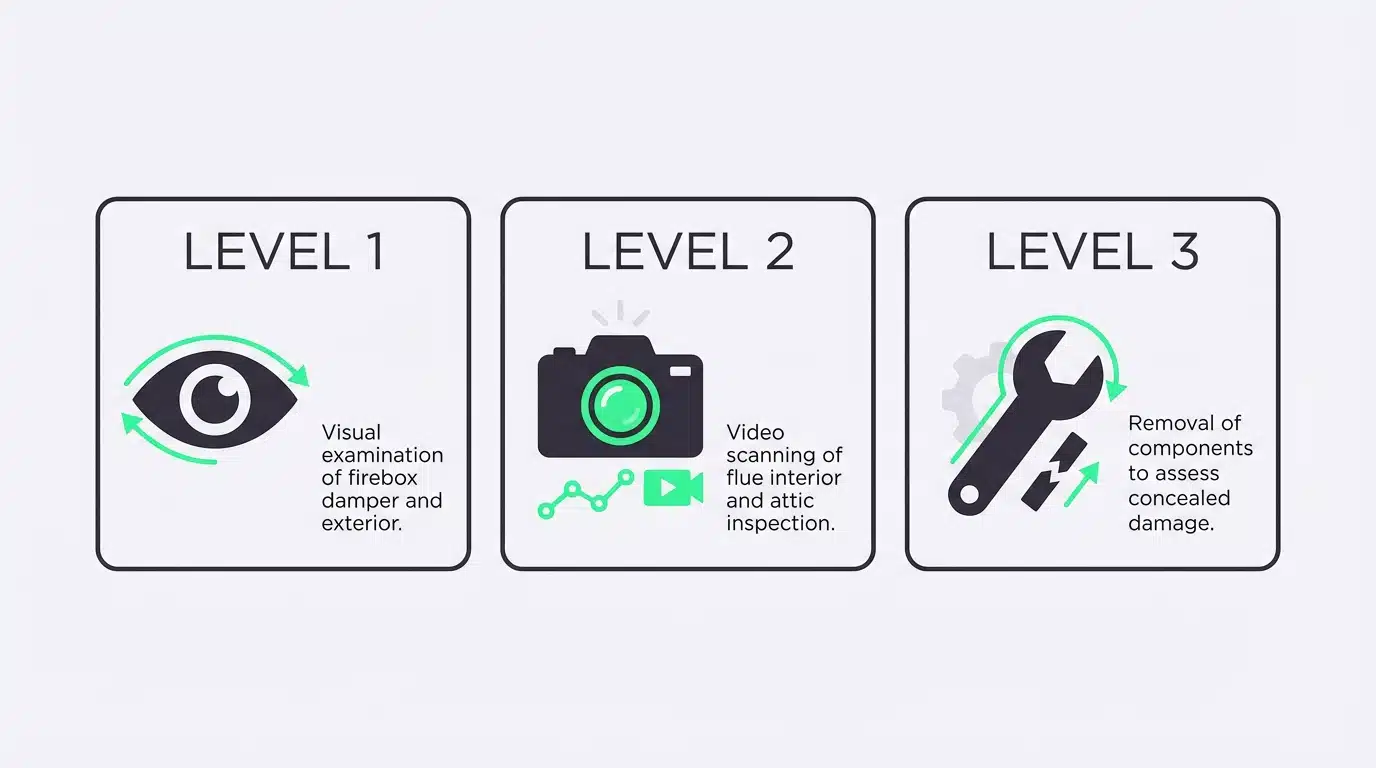
Not all inspections are the same. The chimney service industry generally recognizes three levels, each suited to different situations. Understanding these levels helps you know what to expect and what to request.
During a standard Level 1 inspection, a technician examines the hearth, smoke chamber, and exterior crown for visible signs of damage. The chimney liner is checked for cracks that could allow heat to reach combustible home framing materials. As HUD standards note, the chimney liner plays a vital role in carrying combustion gases safely out of the home, so liner integrity is a critical part of any inspection.
If the inspection reveals structural cracks, liner deterioration, or masonry failure, chimney repair services become the practical next step. Chimney Sweep Pros Houston uses a methodical approach that starts with a detailed assessment so homeowners understand the findings before any repair work is discussed.
Do You Need a Chimney Inspection If You Rarely Use Your Fireplace?
This is one of the most common questions homeowners in Houston ask, and the answer is yes. Low usage does not eliminate risk. A chimney that sits unused for months is still exposed to moisture infiltration, animal intrusion, debris accumulation, and ongoing wear on masonry and metal parts. Birds, squirrels, and raccoons can build nests inside the flue, creating blockages that affect draft and airflow even during occasional use.
Rust can develop on the damper and chase cover. The crown and cap may crack from seasonal temperature shifts. Mortar joints can deteriorate simply from water exposure over time. These issues do not depend on how often you light a fire. They depend on how long the chimney has gone without being checked by someone who knows what to look for.
Tip
Even if you never plan to use your fireplace, an annual inspection protects your home from hidden moisture damage, pest intrusion, and structural degradation that can affect resale value and safety.
Comparing Common Chimney Concerns and What an Inspection Reveals
One advantage of working with Chimney Sweep Pros Houston is that the inspection process is designed to be straightforward and transparent. Rather than presenting a vague list of problems, the team explains what was found, why it matters, and what options are available so the homeowner can make an informed decision.
How Much Does a Chimney Inspection Cost in Houston?
Chimney inspection costs in Houston vary based on several factors. There is no single fixed price because the scope of work depends on the chimney’s condition, accessibility, height, the number of flues, and whether video scanning is required. General market data suggests that basic inspections in the Houston area may fall roughly in the range of two hundred to three hundred dollars, but more involved Level 2 or Level 3 evaluations can cost more depending on complexity.
What Factors Drive the Final Price?
Chimney height and roof pitch affect how much time and equipment are needed. A multi-story home with a steep roof requires more safety precautions. The type of chimney matters too: a prefabricated metal chase system is evaluated differently than a traditional masonry chimney. If the flue has never been inspected and requires internal video scanning, that adds time and specialized equipment to the visit. The condition of the liner, the presence of prior repair work, and whether documentation is needed for a real estate transaction all influence the final cost.
Be cautious of pricing that seems unusually low. In some cases, a heavily discounted inspection is followed by high-pressure recommendations for expensive repairs. A reliable provider will present findings honestly and give you time to consider your options without pressure.
Real Estate Transactions: Why a Home Appraisal Is Not Enough
If you are buying a home in Houston that has a fireplace, it is important to understand that a standard home appraisal does not include a detailed chimney evaluation. Appraisers look at the general condition of the property, but they are not chimney specialists. They may note visible damage, but they are not trained to assess flue liner integrity, internal blockages, or creosote levels.
A Level 2 professional chimney inspection is generally recommended during a property transfer. This inspection includes a video scan of the flue interior, an evaluation of accessible areas in the attic and crawl space near the chimney, and a check of clearances between the chimney and combustible materials. For anyone purchasing a home in Houston, scheduling this inspection before using the fireplace helps avoid surprises and gives you leverage during negotiations if issues are found.
Buying or selling a Houston home with a fireplace? Get a professional chimney assessment before closing.
Five Mistakes Houston Homeowners Make With Chimney Maintenance
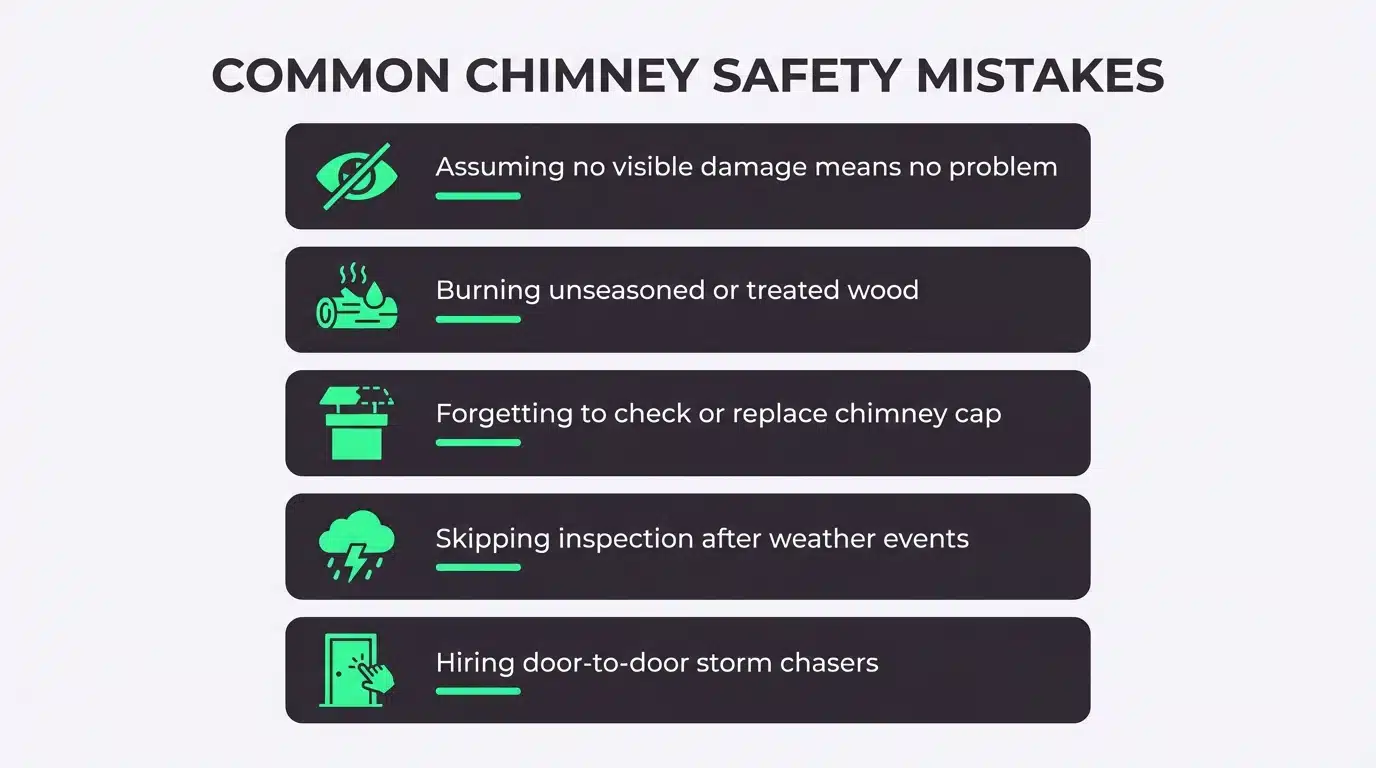
The first common mistake is assuming that a chimney only needs attention if something looks obviously wrong. Many of the most serious chimney problems — including liner cracks, internal creosote accumulation, and early-stage moisture damage — are invisible from the outside. Waiting for a visible sign often means the problem has already progressed significantly.
The second mistake is burning unseasoned or treated wood. Wet wood produces more smoke and more creosote, accelerating buildup inside the flue. Treated or painted wood can release toxic chemicals into the chimney system that cause corrosion and dangerous fumes.
Third, many homeowners forget to check or replace the chimney cap. A missing or damaged cap allows rain, animals, and debris to enter the flue directly, which can cause blockages and moisture damage. Fourth, skipping the inspection after a weather event is risky. Houston storms, including wind-driven rain and occasional hail, can damage the crown, flashing, and cap in ways that are not always visible from ground level.
The fifth mistake is hiring the first contractor who knocks on the door after a storm. Legitimate chimney service companies do not typically solicit door-to-door immediately after weather events. That approach is more commonly associated with unlicensed operators.
How to Choose a Trustworthy Chimney Inspection Provider in Houston
Selecting the right company for your chimney inspection requires some due diligence. The Federal Trade Commission advises homeowners to avoid contractors who demand cash upfront or refuse to provide written contracts and proof of insurance. This applies directly to chimney services as well.
Start by confirming the company has a verifiable local address in the Houston area. Ask whether they carry liability insurance and whether they provide a written report after the inspection. A trustworthy provider will explain what was checked, what was found, and what they recommend, with no obligation to commit to additional services on the spot. Be especially wary of companies that offer extremely low inspection fees and then present alarming findings that require immediate, expensive action.
If your chimney has moisture issues, working with a company that can also handle chimney leak repair in Houston means the diagnosis and the fix come from the same team, which helps avoid conflicting assessments. Chimney Sweep Pros Houston operates locally, provides clear documentation of findings, and does not rely on high-pressure follow-up tactics. That combination of transparency and local accountability makes a practical difference for homeowners who want reliable service without the sales pressure.
When Is the Best Time to Schedule a Chimney Inspection in Houston?
The most practical window for scheduling a chimney inspection in Houston is late summer through early fall. This timing gives you enough lead time to identify and address any issues before the cooler months when fireplace use is most likely. It also means the chimney has been exposed to a full Houston summer of heat and humidity, so any moisture-related damage from the season will be visible during the inspection.
A spring inspection can also make sense, especially after a winter that included unusual cold snaps or heavy rain. Houston’s weather can be unpredictable, and a post-season check helps confirm the system came through without new damage. The key takeaway is that waiting until you actually want to use the fireplace often means competing with higher seasonal demand and fewer scheduling options.
What Houston Homeowners Should Know About Gas Fireplace Inspections
A common misconception is that gas fireplaces do not need chimney inspections. While gas burns cleaner than wood and does not produce creosote, the venting system still requires professional evaluation. Gas appliances can develop issues with the flue connector, the venting termination, or the heat exchanger. Corrosion from combustion byproducts, including water vapor and trace acids, can deteriorate metal flue liners over time.
Additionally, a gas fireplace with a blocked or partially obstructed vent can allow carbon monoxide to enter the home. Annual inspection of gas fireplace venting systems is a practical safety measure, even if the system appears to be working normally.
Did You Know?
Gas fireplaces produce water vapor as a combustion byproduct. Over time, this moisture — combined with trace sulfuric and hydrochloric acids — can corrode metal flue liners from the inside, even though no visible soot or creosote forms.
A Practical Maintenance Framework for Houston Properties
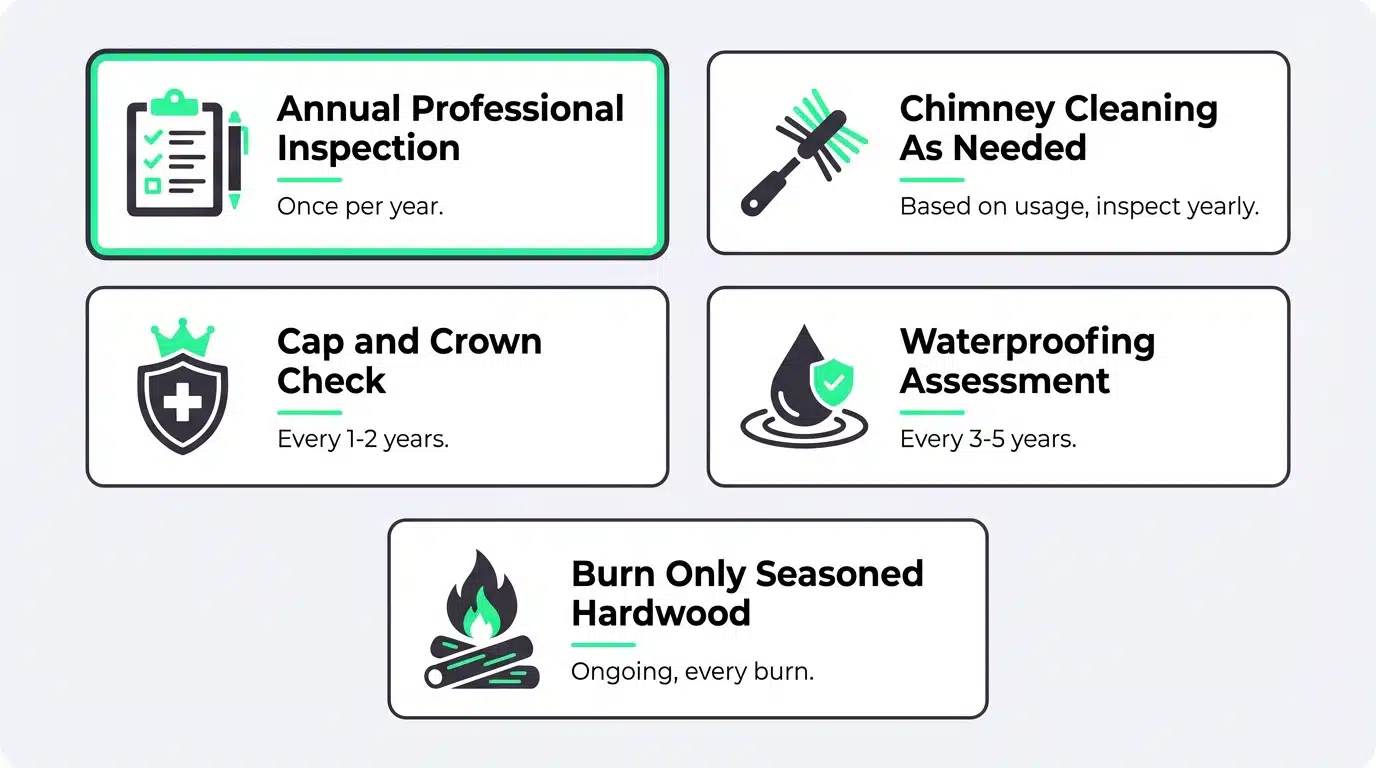
Following this framework helps extend the life of your chimney system and reduces the likelihood of emergency repairs. It is a straightforward approach that costs far less over time than dealing with problems that have been allowed to develop unchecked.
Ready to Find Out What Your Houston Chimney Actually Needs?
If your chimney has not been inspected recently, if you are noticing odors or draft problems, or if you simply want peace of mind before the next time you light a fire, a professional evaluation is the clearest path forward.
Frequently Asked Questions About Chimney Inspection in Houston

About Chimney Sweep Pros Houston
This article was published by Chimney Sweep Pros Houston, a locally operated chimney service company serving homeowners across the Houston, TX area. The team provides chimney inspections, cleaning, repair, and leak resolution with a focus on transparent communication and honest assessments. For questions or to schedule service, visit chimneysweepproshouston.com or call (713) 936-5535.