Imagine lighting your fireplace on one of Houston’s rare cold evenings, only to watch smoke billow back into the living room instead of rising through the flue. The smell lingers for days. You crack windows, run fans, and wonder whether something is actually wrong inside the chimney or if the fireplace is just “old.” In most cases, the answer is simpler than you think — and more important than you might expect. A buildup of creosote, soot, debris, or even animal nesting material inside the flue can quietly turn a cozy fireplace into a source of poor air quality, unpleasant odors, and genuine safety concerns. Professional chimney cleaning service in Houston TX addresses these hidden problems before they become costly or dangerous, helping homeowners enjoy their fireplaces with greater confidence and peace of mind.
Estimated reading time: 14 minutes
Key Takeaways
- Creosote buildup inside chimneys is highly combustible and poses a significant fire risk, even for Houston homeowners who use their fireplaces infrequently.
- Houston’s warm, humid climate accelerates chimney deterioration through moisture intrusion, corrosion, and biological blockages during long idle periods.
- A blocked or dirty chimney can cause carbon monoxide and smoke to back-draft into the home, creating serious health hazards.
- Annual chimney inspections and cleaning are recommended regardless of fireplace usage frequency, per NFPA and CSIA guidelines.
- Extremely low-priced chimney cleaning offers often signal bait-and-switch tactics — always verify scope, insurance, and qualifications before booking.
- Combining chimney cleaning and inspection in a single visit provides a complete picture of chimney health and saves time.
- Booking before Houston’s peak season (November–December) ensures shorter wait times and time to address repairs before cold weather arrives.
Why Professional Chimney Cleaning Is Essential for Houston Homeowners
Every time wood burns in a fireplace, combustion produces byproducts that coat the interior walls of the chimney. The most concerning of these is creosote — a dark, tar-like substance that is highly combustible. According to the U.S. Environmental Protection Agency, creosote forms inside chimneys and poses a significant fire risk when it accumulates. Even Houston homeowners who only use their fireplaces a handful of times each winter can develop enough buildup to warrant professional attention.
The challenge is that chimney hazards are largely invisible from the living room. A fireplace may look perfectly normal while the flue above it harbors layers of soot, cracked liner sections, or animal-related blockages. Transitioning from a quick visual check to scheduling a professional chimney sweep is the practical step that helps identify what the eye cannot see. National data from NFPA research confirms that fireplace and chimney fires account for a disproportionate share of property damage among heating fires — a statistic that underscores why annual professional cleaning matters, even in a warm-climate city like Houston.
Recognizing the Warning Signs You Need a Chimney Sweep
Several physical clues tell Houston homeowners it is time to call a professional chimney cleaning service. Oily black spots appearing near the fireplace opening, a persistent campfire smell when the fireplace is not in use, and difficulty getting a fire started or keeping it burning steadily are all indicators of potential buildup inside the flue. If smoke backs up into the room instead of drafting upward, the chimney’s venting path may be partially blocked by creosote, fallen debris, or nesting material.
Houston’s humidity adds another layer to the problem. Moisture in the air can mix with soot residue inside the chimney and produce a strong, musty odor that seeps into the home even during the warmer months. The U.S. Consumer Product Safety Commission notes that combustion gases can be back-drafted into living spaces when venting is improper or obstructed. If any of these signs sound familiar, scheduling an inspection and cleaning is the most direct path to a resolution.
The Critical Danger of Carbon Monoxide and Obstructions
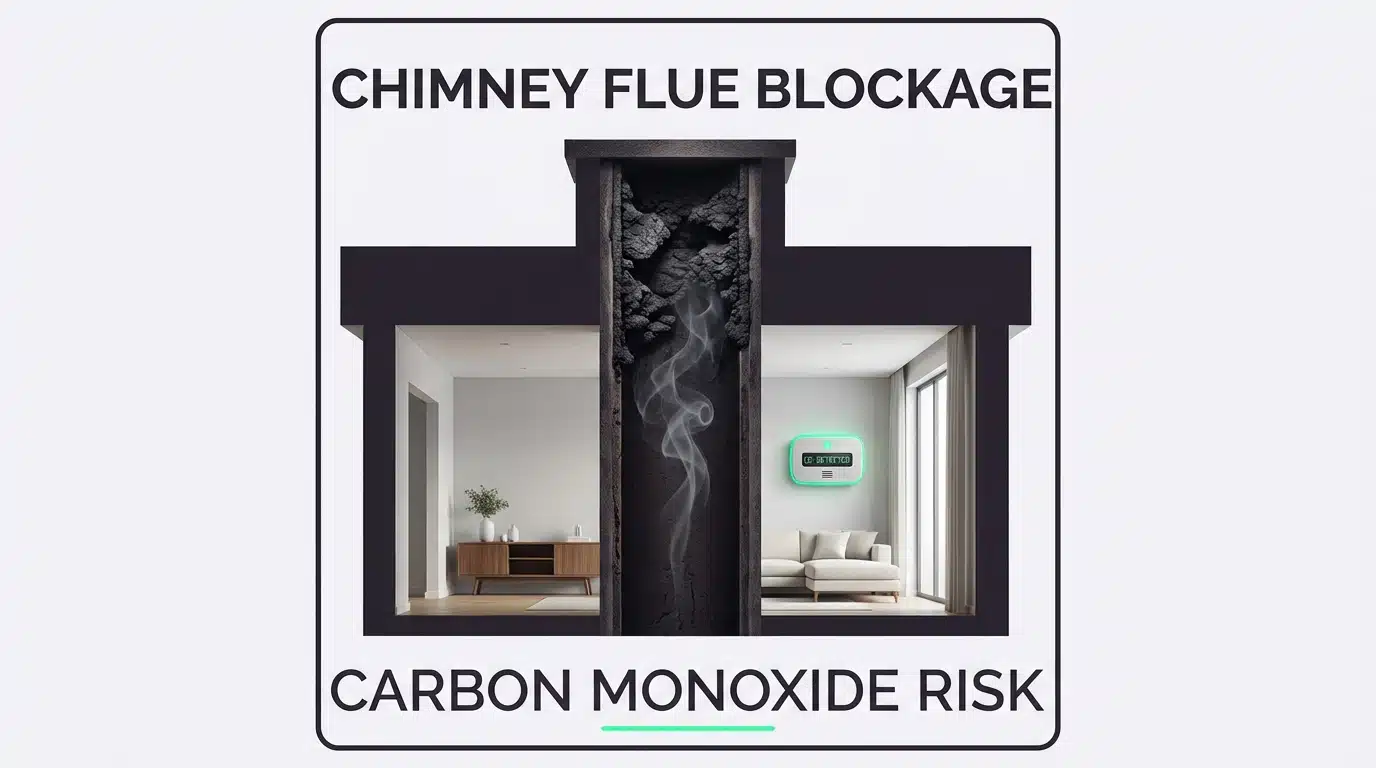
Beyond fire risk, a blocked chimney prevents carbon monoxide from escaping the home. CO is odorless and colorless, which means a family can be exposed without any obvious warning. CPSC data indicates that more than 150 people die annually from carbon monoxide poisoning associated with fuel-burning products. The Houston Fire Department specifically advises residents to check flues for obstructions like bird nests and debris before using a fireplace. Professional chimney cleaning removes those obstructions and helps verify that the venting path is clear enough to allow combustion gases to exit safely.
How Houston’s Warm, Humid Climate Creates Hidden Chimney Problems
Many Houston homeowners assume chimney maintenance is only relevant in colder regions. In reality, Houston’s subtropical humidity can accelerate certain types of chimney deterioration. Moisture penetrating through a cracked crown or deteriorated mortar joints reacts with soot deposits inside the flue, creating acidic compounds that corrode metal liners and weaken masonry from the inside out. Over months of disuse during spring and summer, this slow process can go completely unnoticed.
Seasonal patterns matter as well. A chimney that sits idle for eight or nine months provides ample time for animals to nest, leaves to accumulate, and moisture to settle into cracks. When cooler weather arrives and a homeowner lights the first fire of the season without an inspection, the risks compound. A professional chimney cleaning service in Houston TX accounts for these climate-specific factors — checking not just for soot buildup but also for moisture damage, rust, masonry deterioration, and biological blockages that are common in the Gulf Coast environment.
What Actually Happens During a Professional Chimney Cleaning?
Understanding the process helps homeowners feel more comfortable booking service. A thorough chimney cleaning typically begins with protecting the home’s interior. Drop cloths and containment systems are placed around the fireplace to prevent dust and debris from reaching floors, furniture, or carpets. This containment step is one of the most common concerns homeowners raise, and reputable companies prioritize it.
Next, the technician inspects the flue, firebox, smoke shelf, and damper area. Specialized brushes and high-powered vacuum equipment are used to dislodge and remove soot, creosote, and debris from the chimney walls. The cleaning addresses areas that a homeowner simply cannot reach or evaluate from ground level. Once the cleaning is complete, findings are reviewed with the homeowner — including any signs of cracking, liner damage, or conditions that may require chimney repair services. This transparent review helps property owners make informed decisions about next steps.
A Common Mistake: Skipping Cleaning Because the Fireplace Is Rarely Used
One of the most frequent misconceptions among Houston homeowners is that low fireplace usage eliminates the need for chimney maintenance. The logic seems reasonable — fewer fires should mean less buildup. However, an unused chimney is still exposed to moisture, insects, animal intrusion, and airborne debris that can settle inside the flue over time. A chimney cap in poor condition or a missing rain guard accelerates this accumulation significantly.
Additionally, a small amount of creosote from even two or three fires per season can harden into a glaze that is much more difficult to remove than fresh soot. According to the Chimney Safety Institute of America, the National Fire Protection Association recommends annual chimney inspections and cleaning as needed — regardless of how often the fireplace is used. Scheduling at least an annual inspection helps catch developing issues before they become expensive repairs or safety hazards.
How Much Does Chimney Cleaning Cost in Houston — and What Changes the Price?
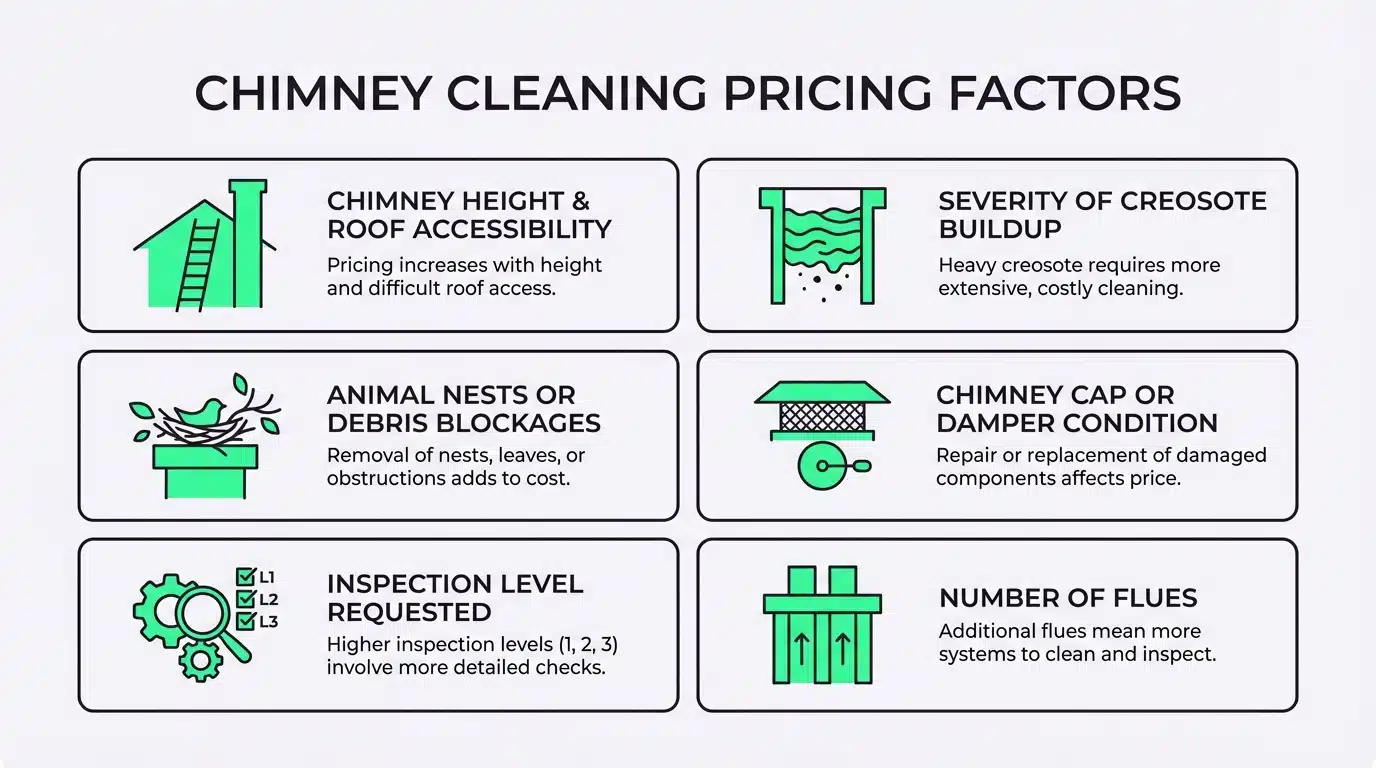
Cost is one of the first questions Houston homeowners ask, and the honest answer is that it depends on several factors. A straightforward cleaning of a single-flue chimney with moderate soot buildup will typically cost less than a service involving heavy creosote removal, animal extraction, or multi-story access challenges. The table below outlines the most common variables that affect chimney cleaning pricing.
| Factor | How It Affects the Price |
|---|---|
| Chimney height and roof accessibility | Taller chimneys or steep roofs may require additional equipment and time |
| Severity of creosote buildup | Glazed or Stage 3 creosote takes significantly longer to remove safely |
| Animal nests or debris blockages | Removal of biological material adds labor and disposal steps |
| Chimney cap or damper condition | Damaged components may need repair or replacement during service |
| Inspection level requested | A visual check differs in scope from a video scan or Level 2 inspection |
| Number of flues | Homes with multiple fireplaces require cleaning of each flue separately |
Chimney Sweep Pros Houston provides clear explanations of what each service visit includes so homeowners understand what they are paying for before work begins. This transparency is one practical way the company helps Houston residents feel confident about the investment.
Why Very Cheap Chimney Sweep Offers Should Raise Concerns
Online ads promising chimney cleaning for an unusually low flat rate deserve scrutiny. Homeowner discussions consistently describe a pattern: a company quotes an extremely low price to get in the door, then presents the homeowner with alarming findings and a dramatically higher “emergency” repair estimate on the spot. This bait-and-switch approach pressures homeowners into approving expensive work without a second opinion.
A trustworthy chimney cleaning service prices its work based on the actual scope involved and communicates that scope before the appointment. If a company cannot explain what is included in its quoted price, that is a meaningful red flag. The CSIA recommends that consumers verify insurance, ask whether a certified professional will be on site, and request a clear breakdown of services before any work begins.
Chimney Cleaning vs. Fireplace Cleaning vs. Chimney Inspection — What Is the Difference?
These terms overlap in everyday conversation, but they refer to different scopes of work. Understanding the distinction helps homeowners request the right service and avoid paying for something they do not need — or missing something they do.
| Service | What It Covers | When It Is Typically Needed |
|---|---|---|
| Fireplace cleaning | Firebox, hearth area, visible ash and soot removal | After regular use or before seasonal startup |
| Chimney cleaning | Full flue, smoke shelf, damper, and firebox cleaning | Annually, or when buildup, odors, or draft issues appear |
| Chimney inspection | Evaluation of structural condition, liner, crown, cap, and venting | Annually, before a home purchase, or after a chimney fire or storm |
Many homeowners benefit from combining cleaning and inspection in a single visit. A cleaning removes the buildup, while the inspection identifies conditions — like hairline cracks in the liner or early moisture intrusion — that cleaning alone cannot address. Chimney Sweep Pros Houston offers both services during a single appointment, helping homeowners get a complete picture of their chimney’s condition without scheduling multiple visits.
Can a Dirty Chimney Cause Smoke or Carbon Monoxide to Enter Your Home?
Yes. When creosote, soot, or debris restricts the flue opening, the chimney cannot draft properly. Instead of rising and exiting through the top of the chimney, smoke and combustion gases — including carbon monoxide — can spill back into the living space. The result ranges from mildly unpleasant (a smoky smell in the house) to genuinely dangerous (prolonged CO exposure without visible or olfactory warning).
This is one reason why the CPSC urges annual inspection of all fuel-burning appliances, chimneys, and vents. A professional chimney cleaning removes the physical obstructions that cause back-drafting, while an inspection confirms that the structural venting path is intact. For Houston homeowners, where seasonal neglect can allow problems to develop undetected, this combination of cleaning and inspection provides meaningful protection.
How to Choose a Reliable Chimney Cleaning Service in Houston
Selecting the right company starts with asking clear questions. Before booking, a homeowner should confirm what is included in the service, whether cleanup and floor protection are part of the standard process, and whether the technician will explain findings after the work is done. The CSIA’s hiring guide recommends verifying that a company carries liability insurance and that a qualified professional — not just a subcontractor with minimal training — will be performing the work.
Red Flags That Suggest a Less-Than-Professional Operation
Pressure tactics during the service visit, cash-only payment demands, vague or shifting descriptions of what is included, and generic call-center scheduling with no local presence are all warning signs. Houston homeowners should also be cautious of companies that cannot provide a physical business address or that use stock photography and fabricated reviews on their websites. A legitimate local chimney service will have verifiable Houston-area experience and be willing to answer questions directly.
Practical Maintenance Tips Between Annual Professional Cleanings
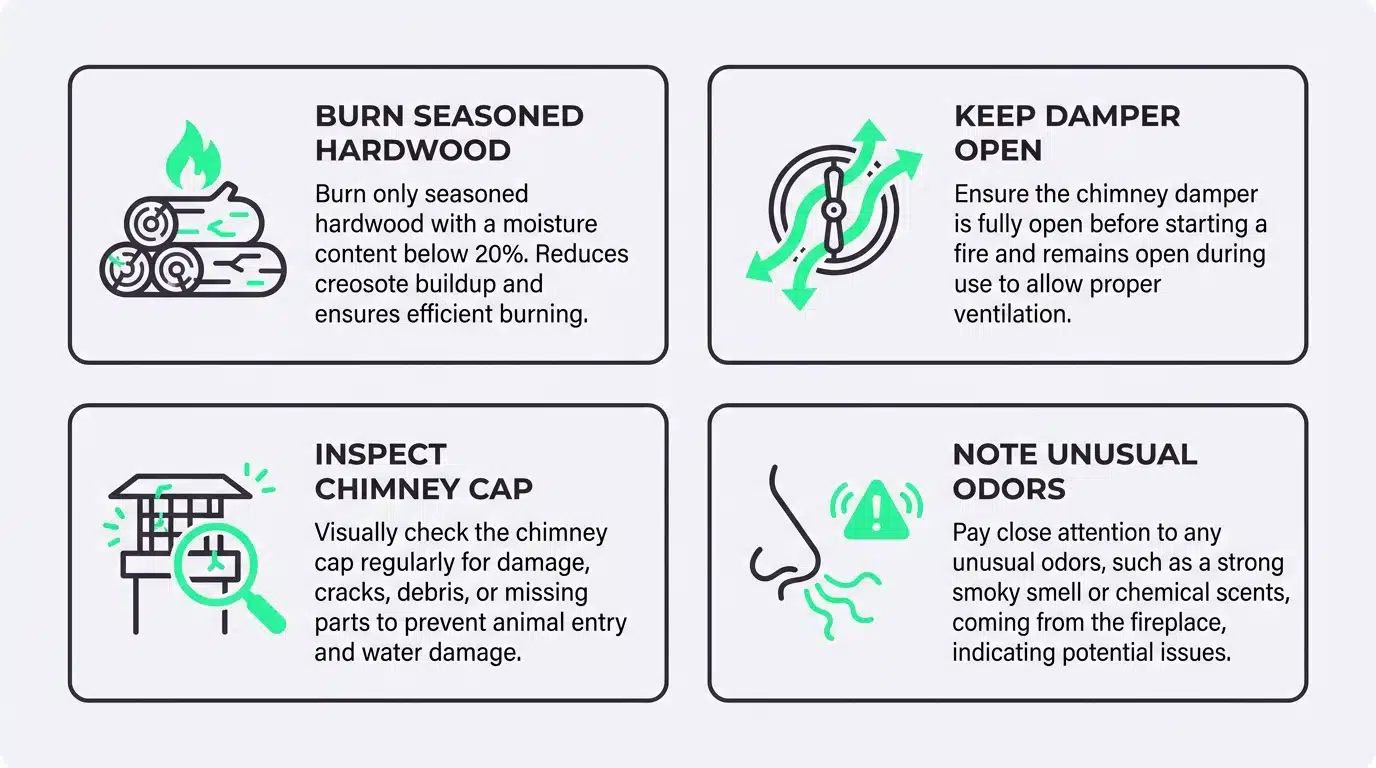
Homeowners can take simple steps to reduce buildup and extend the benefits of professional cleaning. Burning only seasoned hardwood — such as oak or ash that has dried for at least six months — produces significantly less creosote than burning green or softwood. Keeping the damper fully open while a fire is burning and until ashes are completely cold helps maintain proper airflow. The EPA specifically recommends professional annual inspection for wood-burning appliances, and the CPSC advises that fireplace dampers should remain open during use to prevent combustion gases from accumulating indoors.
Between professional visits, homeowners should visually check the chimney cap for damage or missing sections, look for water stains on the ceiling or walls near the chimney, and note any unusual odors coming from the fireplace. These observations help the technician focus the next inspection and can catch developing problems early.
Booking Before Peak Season: A Practical Advantage
Houston’s cool-weather window is short, which means demand for chimney services tends to spike in November and December. Scheduling a cleaning and inspection before that seasonal rush gives homeowners several advantages: shorter wait times for appointment availability, the opportunity to address any repair needs before the fireplace is actually needed, and the peace of mind that comes from knowing the system is ready for safe use when temperatures drop.
Chimney Sweep Pros Houston works with homeowners year-round, but early-season scheduling tends to offer the most flexibility. Whether you need routine maintenance, a deeper cleaning, or an inspection to evaluate a concern you have noticed, reaching out before peak demand helps ensure timely service.
What Houston Homeowners Gain from Working with Chimney Sweep Pros Houston
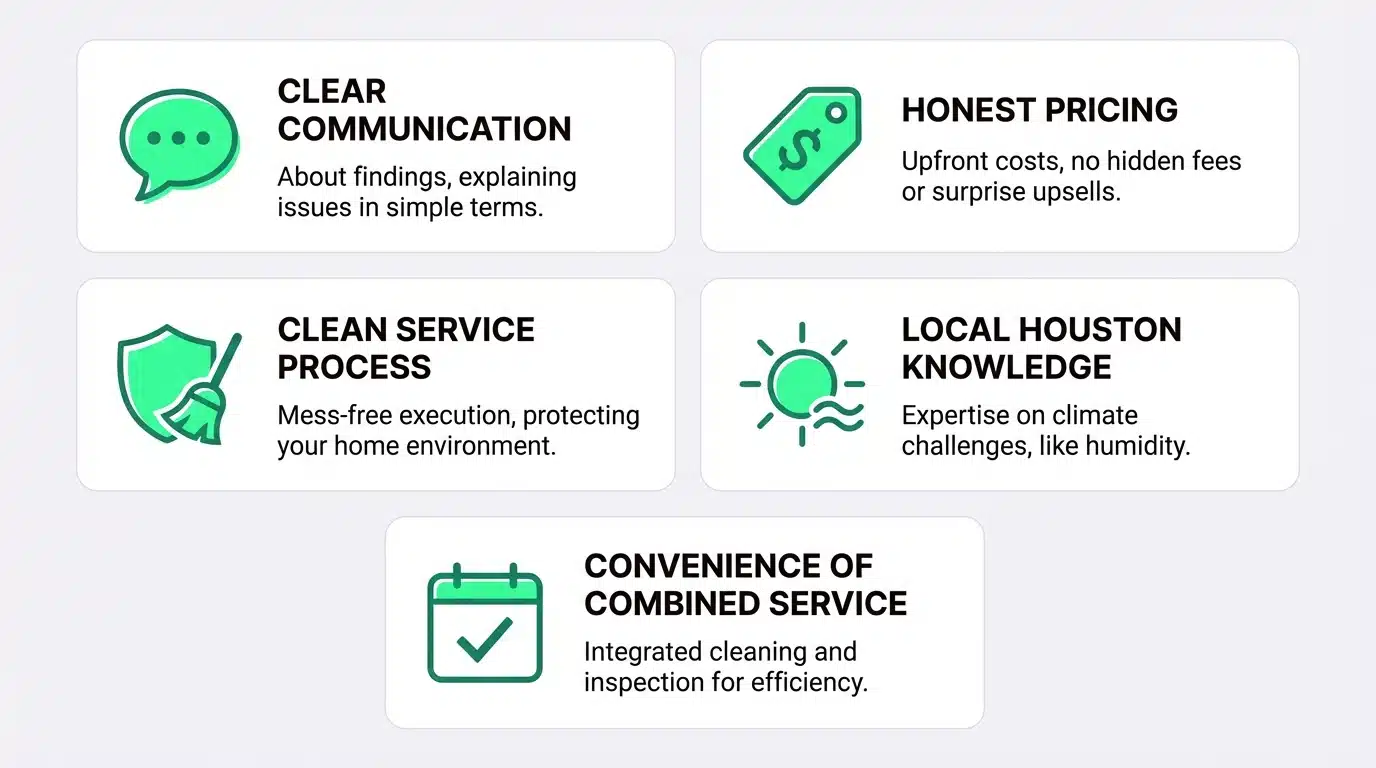
The practical benefits of working with a local, experienced chimney service company go beyond the cleaning itself. The table below maps common homeowner needs to what Chimney Sweep Pros Houston delivers in practice.
| Homeowner Need | How Chimney Sweep Pros Houston Helps |
|---|---|
| Clear communication about findings | Technicians review results directly with the homeowner after every service visit |
| Honest pricing with no surprise upsells | Service scope and pricing are explained before work begins |
| Clean, mess-free service process | Interior protection and thorough cleanup are standard on every job |
| Local knowledge of Houston climate challenges | Services account for humidity, moisture intrusion, and seasonal use patterns |
| Convenience of combined cleaning and inspection | Both can be completed in a single appointment to save time |
This approach is built around practical service quality — dependable workmanship, transparent process, and local expertise that reflects the specific conditions Houston homes face.
Frequently Asked Questions About Chimney Cleaning in Houston
What is included in a professional chimney cleaning service?
A professional chimney cleaning typically includes removal of soot, creosote, and debris from the flue, firebox, and smoke shelf. It also includes floor and furniture protection, use of specialized brushes and vacuum equipment, and a post-cleaning review of findings with the homeowner. Some services also include a basic visual inspection of the chimney’s interior condition.
How long does a chimney cleaning appointment usually take?
Most standard chimney cleanings take approximately 45 minutes to 90 minutes, depending on the level of buildup, chimney accessibility, and whether an inspection is included. Heavily soiled chimneys or those with animal blockages may require additional time.
Will chimney cleaning make a mess inside my home?
When performed by a professional service, chimney cleaning should not leave a mess. Reputable companies use drop cloths, plastic sheeting, and industrial-grade vacuums to contain soot and debris throughout the process. Cleanup of the work area is part of a standard service visit.
Do I need chimney cleaning if I have a gas fireplace?
Gas fireplaces produce far less soot and no creosote, but they still require periodic inspection. Components like the burner, pilot assembly, venting connections, and flue can develop issues over time. An annual inspection helps identify venting problems, corrosion, or debris accumulation that may affect safe operation.
How do I know if my chimney has a dangerous level of creosote?
Creosote buildup is categorized in three stages. Stage 1 is a light, brushable soot. Stage 2 is a flaky, tar-like coating. Stage 3 is a hard, glazed layer that is extremely combustible and difficult to remove. A professional chimney sweep can identify the stage during an inspection and recommend the appropriate cleaning method.
Should I schedule chimney cleaning and inspection at the same time?
Yes, combining both services in a single visit is efficient and provides a more complete assessment. Cleaning removes the buildup, while inspection reveals structural or venting conditions that buildup may have been hiding. This combination is especially valuable for homes that have not been serviced in more than a year.
Is your chimney overdue for cleaning, or have you noticed any of the warning signs described above? Whether it is an unusual odor, visible soot, poor draft, or simply the desire for a safer fireplace this season, Chimney Sweep Pros Houston is here to help Houston homeowners with honest, thorough, and dependable chimney service. Contact Chimney Sweep Pros Houston to schedule your chimney cleaning or inspection today.