A damaged chimney is not just a cosmetic concern. For Houston homeowners, even a small crack in the crown or a few crumbling mortar joints can turn into a serious safety hazard that persists throughout the year. While many people associate chimney problems with cold-weather states, the reality is that Houston’s intense humidity, heavy rainfall, and temperature swings put significant stress on masonry structures. Whether the issue is a persistent leak, visible brick deterioration, or smoke that drifts back into your living room, a dependable chimney repair service in Houston TX is the practical first step toward a safer, better-performing fireplace system. Carbon monoxide, often called the “silent killer,” can enter living spaces through a compromised chimney venting system, and the EPA recommends annual professional inspections specifically to help detect these kinds of hidden dangers before they escalate.
Key Takeaways
- Houston’s humidity, heavy rain, and heat accelerate chimney damage far more than most homeowners realize.
- Chimney leaks most commonly originate from cracked crowns, failed flashing, deteriorated mortar joints, or missing caps.
- Chimney cleaning and chimney repair are different services that solve different problems — a professional inspection determines which you need.
- DIY chimney fixes often trap moisture and worsen damage; professional repair uses vapor-permeable materials and meets fire safety codes.
- Using a fireplace connected to a damaged chimney is a safety risk due to potential carbon monoxide exposure and fire hazards.
- Annual inspections are the single most effective way to catch problems early and keep repair costs manageable.
Concerned About Your Chimney’s Condition?
Don’t wait for a small crack to become a costly rebuild. Get a professional chimney inspection from Houston’s trusted local experts.
What Exactly Does a Chimney Repair Service in Houston Include?
A professional chimney repair service goes far beyond patching a visible crack. It typically begins with a thorough inspection to identify the source and extent of the damage, followed by targeted repairs designed to restore structural integrity, moisture resistance, and safe venting performance. Depending on the findings, the scope of work may involve crown repair, tuckpointing deteriorated mortar joints, replacing damaged bricks, fixing or replacing flashing, relining the flue, repairing the firebox interior, installing or replacing a chimney cap, or applying waterproofing sealant to the exterior masonry. In some cases, a partial rebuild may be recommended when damage has progressed beyond the point where spot repairs can provide a lasting solution.
The key distinction between reliable chimney repair and a quick cosmetic fix is the diagnostic process. A qualified technician identifies not just the visible symptom but the underlying cause, whether that is water intrusion, heat damage, settling, or age-related wear. This approach helps prevent recurring problems and avoids unnecessary work.
How Do You Know Your Chimney Needs Repair? A Scenario Most Houston Homeowners Recognize
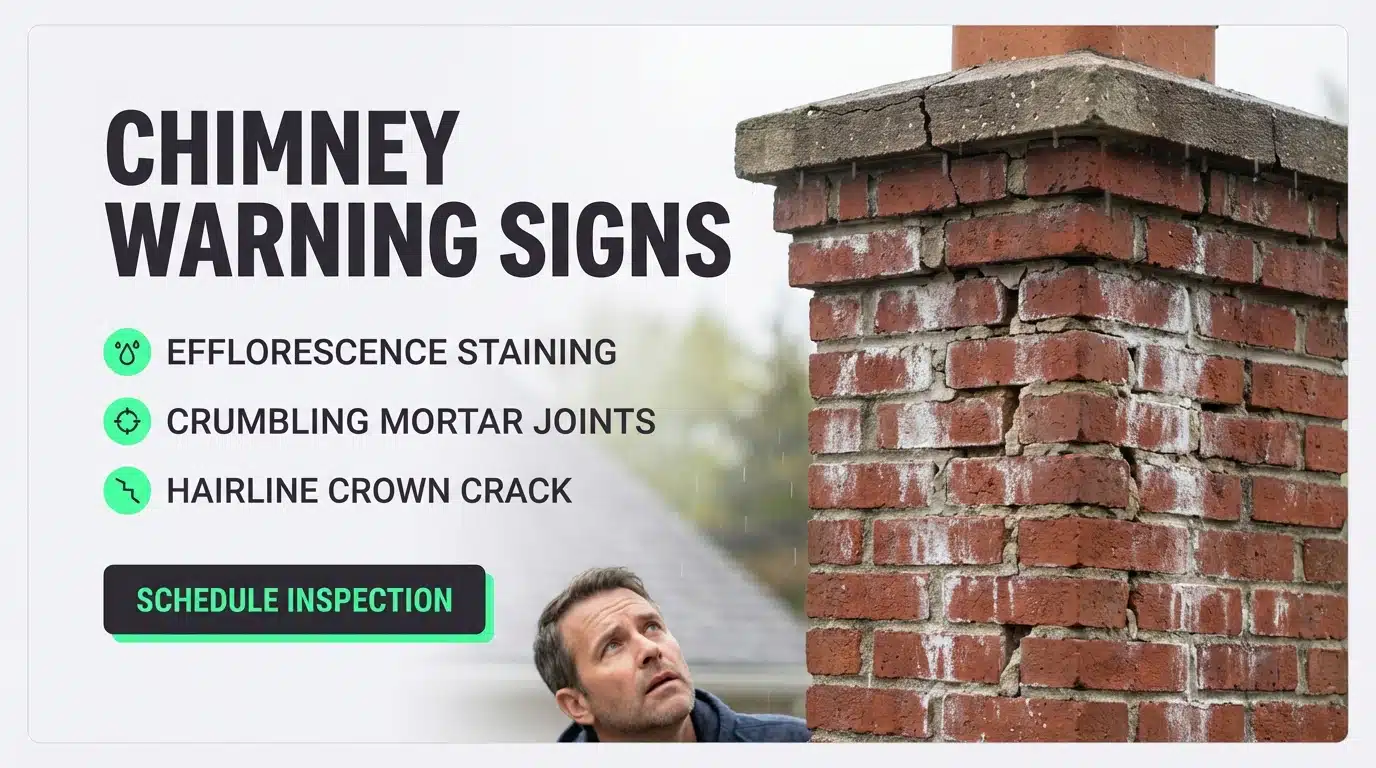
Imagine noticing a damp spot on the ceiling near the fireplace after a heavy rain, or catching a faint musty odor every time you walk past the hearth. Maybe you step outside and see white staining on the bricks, which is called efflorescence, a sign that moisture is being absorbed and deposited through the masonry. These are the kinds of everyday observations that signal something is wrong inside or around the chimney structure. According to the Chimney Safety Institute of America, moisture is the single biggest enemy of masonry chimneys, and the damage it causes tends to accelerate once it begins.
Exterior Warning Signs That Should Not Be Ignored
Walking around the outside of your home can reveal a lot about chimney condition. Cracked or chipped bricks, mortar joints that are receding or crumbling, pieces of masonry on the ground near the base, a visibly tilting chimney stack, and rust stains around the cap or flashing area are all exterior indicators. A damaged chimney crown, which is the concrete or mortar slab at the very top, is particularly common in Houston because repeated wet-dry cycles cause it to crack and allow water to seep into the chimney structure from above.
Did You Know?
Efflorescence — that white, chalky residue on brick surfaces — is not just a cosmetic issue. It is a visible indicator that water is actively moving through your masonry, dissolving mineral salts and depositing them on the surface as it evaporates. If you see it on your chimney, moisture intrusion is already underway.
What About Interior Clues That Something Is Wrong?
Inside the home, signs of chimney damage often present as water stains on walls or ceilings near the chimney, peeling paint or wallpaper, a persistent smoky or damp smell even when the fireplace is not in use, visible soot streaks around the firebox opening, or a damper that feels stiff or does not seal properly. If smoke drifts into the room during use rather than venting upward, this can indicate a draft problem caused by a blockage, a cracked liner, or structural damage that is disrupting airflow. The CSIA notes that chimney fires can generate temperatures high enough to crack clay tiles, warp metal components, and damage the surrounding masonry, sometimes without the homeowner even realizing a fire occurred inside the flue.
Do You Need Chimney Repair or Chimney Cleaning? Understanding the Difference
This is one of the most common points of confusion for homeowners. Chimney cleaning addresses the removal of creosote buildup, soot, debris, and blockages from inside the flue and firebox. Chimney repair addresses physical damage to the chimney structure itself, including cracked crowns, deteriorated mortar, damaged flashing, broken liner tiles, and compromised waterproofing. They are different services that solve different problems, though they often overlap in practice. A chimney that has not been cleaned in years may also have repair needs that only become visible once the buildup is removed.
The right approach starts with a professional inspection. An experienced technician can determine whether the issue is a maintenance problem that cleaning will resolve, a structural problem that requires repair, or a combination of both. This prevents homeowners from paying for cleaning when the real problem is a cracked crown, or from paying for masonry work when the actual issue is a flue blockage affecting draft performance.
Tip for Houston Homeowners
If you are unsure whether you need cleaning, repair, or both, ask your chimney professional for a Level 2 inspection. This includes a video scan of the flue interior and provides a comprehensive picture of both cleanliness and structural condition, saving you from scheduling two separate service calls.
What Causes Chimney Leaks in Houston Homes?
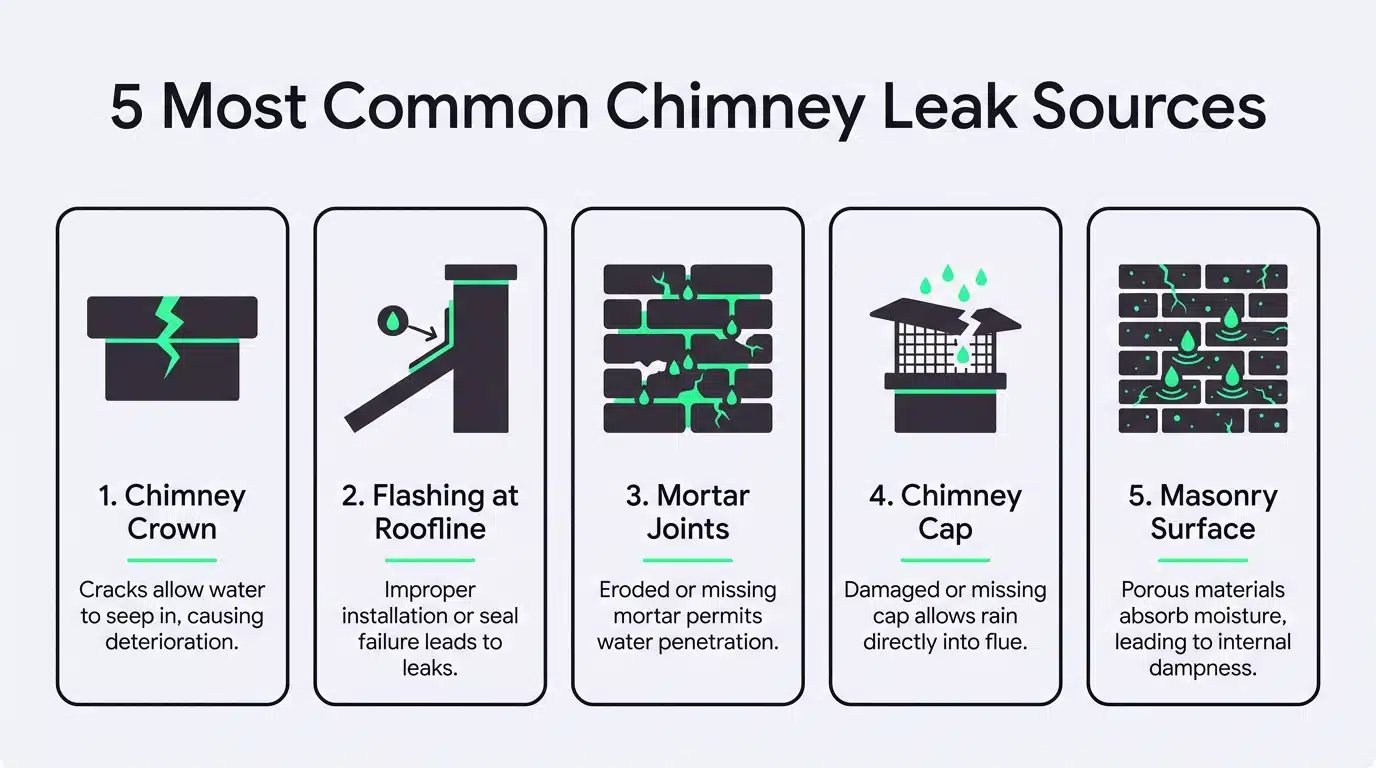
Houston’s climate creates a particularly challenging environment for chimneys. The combination of high humidity, heavy seasonal rainfall, and intense summer heat accelerates the deterioration of masonry materials, sealants, and metal components. According to the CSIA’s guidance on chimney leaks, the most common water entry points are the chimney crown, the flashing where the chimney meets the roof, missing or damaged chimney caps, and deteriorated mortar joints that allow water to be absorbed directly into the brick.
A leak does not always originate from inside the chimney itself. Sometimes the problem is at the roof-to-chimney junction, and sometimes it is water being absorbed through the exterior brick face during prolonged rain events. Accurate diagnosis matters because the repair approach is different in each case.
Can a Cracked Chimney Actually Be Repaired?
In many cases, yes, a cracked chimney can be repaired rather than replaced. However, the type of repair depends entirely on what is cracked, where the crack is located, and how deep the damage extends. A hairline crack in the crown is a different situation from a structural crack running through the masonry stack, and both are different from a cracked flue liner that is hidden inside the chimney. Surface-level mortar cracks can often be addressed through tuckpointing, while crown cracks may require a crown seal application or full crown replacement. Internal liner cracks typically require relining the flue to restore safe venting.
The important point is that not every crack can simply be sealed with caulk and forgotten. A professional evaluation determines whether a repair will hold long-term or whether a more comprehensive approach is needed. This distinction is where homeowners benefit most from working with a local chimney service that understands Houston-specific conditions and building materials.
The Most Common Chimney Repairs Houston Homeowners Need
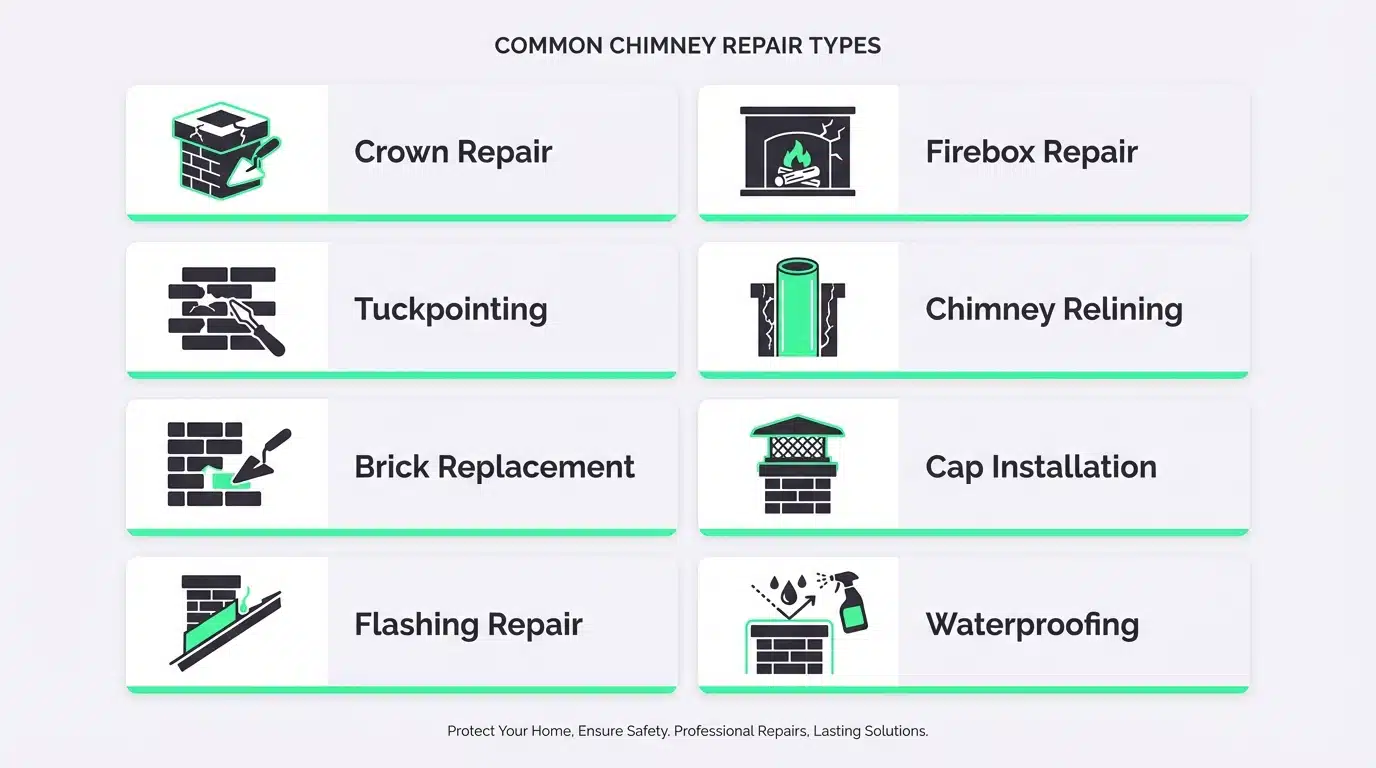
Chimney Sweep Pros Houston provides thorough assessments that identify which of these repairs applies to each specific situation. Rather than recommending unnecessary work, the process focuses on diagnosing the actual problem and presenting a clear explanation of what needs attention and why. This practical, transparent approach helps Houston homeowners make informed decisions about their chimney maintenance.
How Much Does Chimney Repair Cost in Houston?
The cost of chimney repair in Houston varies significantly depending on several factors: the type and extent of damage, the height and accessibility of the chimney, the materials involved, and whether the work is a localized fix or a broader structural repair. A simple cap replacement is a different investment than rebuilding several courses of brick or relining a damaged flue. Crown repairs, tuckpointing, and flashing work each carry different labor and material requirements.
Rather than providing a single price that may not apply to your situation, the most reliable path to an accurate estimate is a professional on-site inspection. A detailed inspection allows the technician to see the full scope of the issue, explain what needs to be done, and provide a written breakdown of the work involved. This matters because a low estimate based on guesswork often leads to surprises mid-project, while a thorough evaluation up front gives homeowners a realistic picture of both the cost and the expected outcome.
Get an Accurate Repair Estimate — Not a Guess
Every chimney is different. A professional on-site inspection gives you a clear, written breakdown of exactly what your chimney needs and what it will cost.
A Mistake Many Homeowners Make: DIY Chimney Fixes
It can be tempting to pick up a tube of high-temperature caulk or mortar repair compound from the hardware store and address a visible crack yourself. The problem is that cosmetic surface repairs often trap moisture behind the seal rather than allowing the masonry to breathe, which can actually accelerate deterioration from the inside out. Structural integrity, fire safety codes, and proper waterproofing require specialized materials, tools, and knowledge that go beyond what a weekend project can achieve.
The Texas Department of Insurance advises that chimneys and fireplaces should be cleaned and inspected by a professional at least once a year. Improper repairs can also create venting problems that allow combustion byproducts, including carbon monoxide, to back-draft into living spaces. When it comes to chimney work, the risk of getting it wrong outweighs the potential savings of doing it yourself.
Did You Know?
Standard hardware store caulk and non-breathable sealants can actually make chimney problems worse. Professional chimney waterproofing uses vapor-permeable products that block liquid water from entering while still allowing trapped moisture inside the masonry to escape as vapor. Using the wrong product seals moisture in, leading to accelerated spalling and structural decay.
Is It Safe to Use a Fireplace When the Chimney Is Damaged?
Using a fireplace connected to a damaged chimney is not recommended until a professional inspection confirms it is safe. Cracked liners can expose combustible materials in the surrounding wall structure to extreme heat. Blocked or partially obstructed flues can cause smoke and gases to vent into the home instead of up and out. Damaged crowns or missing caps can allow water to enter the flue, which then creates steam and pressure when the fireplace is used, potentially worsening existing cracks.
If you notice any signs of chimney damage, the safest course of action is to stop using the fireplace and schedule an inspection. This is not about creating urgency where none exists. It is a straightforward safety consideration. A professional evaluation can determine whether the chimney is safe to use as-is, whether a minor repair is sufficient, or whether more significant work is needed before the next fire.
Should You Repair or Rebuild Your Chimney?
This depends on the extent and location of the damage. If the deterioration is limited to the crown, a section of mortar joints, or the flashing, a targeted repair is usually the most practical and cost-effective solution. If the damage is widespread, involving multiple courses of brick, significant structural shifting, extensive internal liner failure, or repeated water intrusion despite prior repairs, a partial or full rebuild may be the better long-term investment.
An experienced chimney professional can help you understand where your chimney falls on this spectrum. The goal is not to push the most expensive option but to provide an honest assessment that weighs repair durability, cost, safety, and long-term performance. Chimney Sweep Pros Houston approaches every evaluation with this practical mindset, offering Houston homeowners clear information so they can decide what makes sense for their home and budget.
How Long Does Chimney Repair Typically Take?
Repair timelines vary based on the scope of work. A chimney cap replacement or a minor crown seal application may be completed in a single visit of a few hours. Tuckpointing a section of mortar joints or replacing a few bricks might take a day. More involved projects like full crown replacement, extensive masonry repair, flashing replacement, or chimney relining can take two to several days, depending on weather conditions, material availability, and the complexity of the chimney’s design and accessibility.
One advantage of working with a local Houston-based chimney service is familiarity with the weather patterns that affect scheduling. Rain delays are a reality for any exterior masonry work, and a company that understands Houston’s seasonal patterns can plan the job to minimize disruption and ensure proper curing of repair materials.
How Houston’s Climate Affects Chimney Longevity Compared to Other Regions
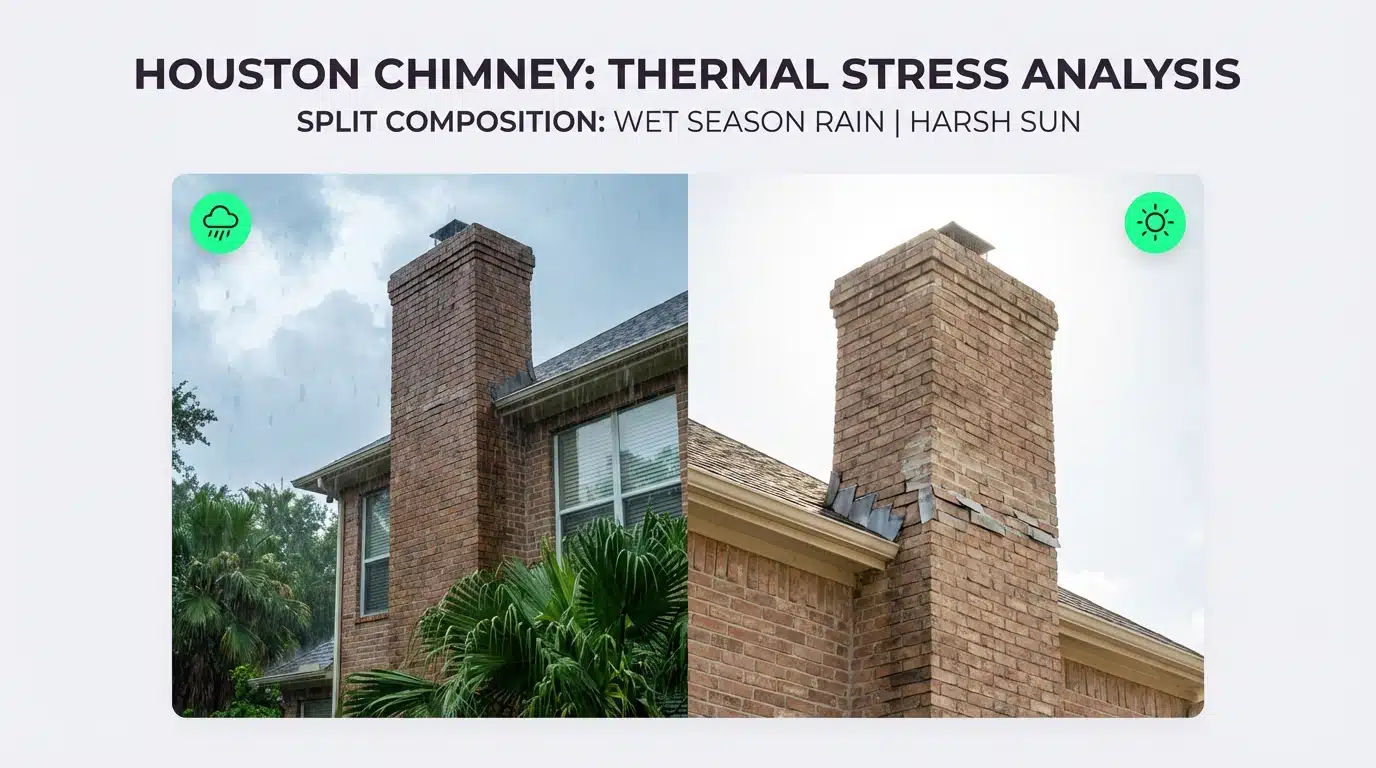
Houston does not experience the freeze-thaw cycles that destroy chimneys in northern states, but it has its own set of challenges that are just as damaging over time. High humidity means masonry is almost constantly exposed to moisture in the air. Heavy downpours during storm season can overwhelm compromised flashing or cracked crowns in a single event. The intense Texas sun causes thermal expansion and contraction in masonry materials, metal flashing, and sealants, gradually weakening bonds and opening small gaps that become larger over the years.
Houston’s clay-rich soils also contribute to chimney problems through foundation movement. Even slight settling can cause the chimney stack to shift, opening gaps in the mortar and stressing the flashing connection at the roofline. These factors mean that chimney maintenance and timely repair are not optional for Houston homeowners who want to avoid larger, more expensive problems down the road.
What to Look for When Choosing a Chimney Repair Company in Houston
Not all chimney service providers operate the same way. When evaluating a chimney repair company, consider whether they conduct a detailed inspection before providing an estimate, whether they explain their findings clearly and in writing, whether they have experience with Houston-specific conditions like humidity damage and soil movement, and whether they carry appropriate insurance and follow current safety standards. Industry certifications from organizations like the Chimney Safety Institute of America or the National Fireplace Institute indicate that technicians have met recognized professional knowledge requirements.
Chimney Sweep Pros Houston provides detailed inspection reports that explain what was found, what needs attention, and what can wait. This kind of transparency helps homeowners avoid paying for unnecessary work while ensuring that genuine safety and performance issues are addressed properly. The company’s local Houston expertise means familiarity with the specific masonry challenges, weather patterns, and building styles that affect chimney performance in this area.
Ready to Find Out What Your Chimney Actually Needs?
If you have noticed any signs of chimney damage — water stains, crumbling mortar, a persistent odor, or smoke that is not venting properly — the most practical next step is a professional inspection. No guesswork, no pressure, just honest information and dependable local service.
Frequently Asked Questions About Chimney Repair in Houston

About Chimney Sweep Pros Houston
Chimney Sweep Pros Houston is a locally operated chimney service company providing professional inspections, cleaning, and repair services to homeowners across the Houston metropolitan area. The company focuses on transparent diagnostics, clear communication, and repair solutions tailored to Houston’s unique climate and building conditions.
Phone: (713) 936-5535
Website: chimneysweepproshouston.com