Imagine settling in on a cool Houston evening, lighting the fireplace for the first time in months, and noticing smoke drifting back into the living room instead of rising through the flue. Maybe there is an unusual odor. Maybe the draft feels weaker than you remember. These are not rare scenarios for Houston homeowners, and they often point to an issue that a professional chimney inspection is designed to catch before it becomes a bigger problem. Whether you have used your fireplace heavily or barely touched it all year, understanding what a chimney inspection service in Houston TX actually involves can help you make smarter decisions about safety, maintenance, and the long-term performance of your chimney system.
Key Takeaways
- Annual chimney inspections are recommended by the U.S. Fire Administration and CSIA, regardless of how often you use your fireplace.
- Houston’s high humidity, heavy rainfall, and temperature swings accelerate chimney wear in ways that are often invisible to homeowners.
- A chimney inspection is not the same as chimney cleaning. They serve different purposes but are often performed together.
- Three standardized inspection levels exist. The right level depends on your situation, such as routine maintenance versus a home sale.
- Unused chimneys can develop serious problems including animal nesting, moisture damage, and debris blockages.
- Choosing an inspector based on price alone can lead to aggressive upselling or missed issues. Transparent communication matters.
- Creosote buildup, carbon monoxide risks, and structural deterioration are the primary hazards a professional inspection is designed to catch.
Has your chimney been inspected in the past 12 months?
Get a thorough, clearly explained inspection from Chimney Sweep Pros Houston with honest recommendations and no pressure.
Schedule Your Chimney Inspection Today
Or call now: (713) 936-5535
Why Professional Chimney Maintenance Matters in Houston
A chimney does more than route smoke out of your home. It manages airflow, contains combustion byproducts, and protects the surrounding structure from extreme heat and moisture. When any part of this system is compromised, the consequences range from poor fireplace performance to genuine safety hazards like chimney fires or carbon monoxide exposure. The U.S. Fire Administration recommends that all chimneys and heating equipment be inspected every year by a qualified professional. That recommendation exists because problems inside a chimney are often invisible until something goes wrong.
For Houston homeowners, this annual check is not just about fire prevention. The local climate introduces its own set of challenges. High humidity, heavy rain events, and temperature swings can accelerate wear on masonry, metal components, and sealants that most homeowners never see. A professional chimney inspection identifies these issues early, when they are typically less expensive and less complicated to address. Inspections also frequently reveal that the chimney needs professional chimney sweeping and cleaning to remove accumulated creosote, soot, and debris that can restrict airflow or increase fire risk.
What Does a Professional Chimney Inspection Actually Include?
One of the most common questions Houston homeowners ask before booking is straightforward: what am I paying for? A professional chimney inspection is a structured evaluation of your entire chimney and fireplace system, designed to identify safety concerns, structural wear, and performance issues. The scope depends on the inspection level, but even a standard visit covers far more than a quick glance up the flue.
Interior Components That Are Commonly Checked
The inspection typically starts at the firebox and works upward. The technician examines the firebox walls for cracks, the damper for proper operation, the smoke chamber for creosote buildup or deterioration, and the flue liner for gaps, cracks, or obstructions. Each of these components plays a direct role in how safely and efficiently your fireplace vents combustion gases out of the home.
Exterior Areas That Are Commonly Checked
Outside, the inspection covers the chimney cap, the crown, flashing around the roofline, visible masonry joints, and the chase cover if applicable. In Houston, moisture intrusion is a persistent concern, so inspectors pay close attention to signs of water damage, crumbling mortar, rusted metal, and sealant failure. These exterior issues often develop silently and can lead to expensive structural repairs if left unaddressed.
Understanding the Three Levels of Chimney Inspection
The chimney service industry uses a standardized framework of three inspection levels, defined by the Chimney Safety Institute of America. Knowing which level applies to your situation helps you understand what to expect during the service call and why the scope may vary from one home to the next.
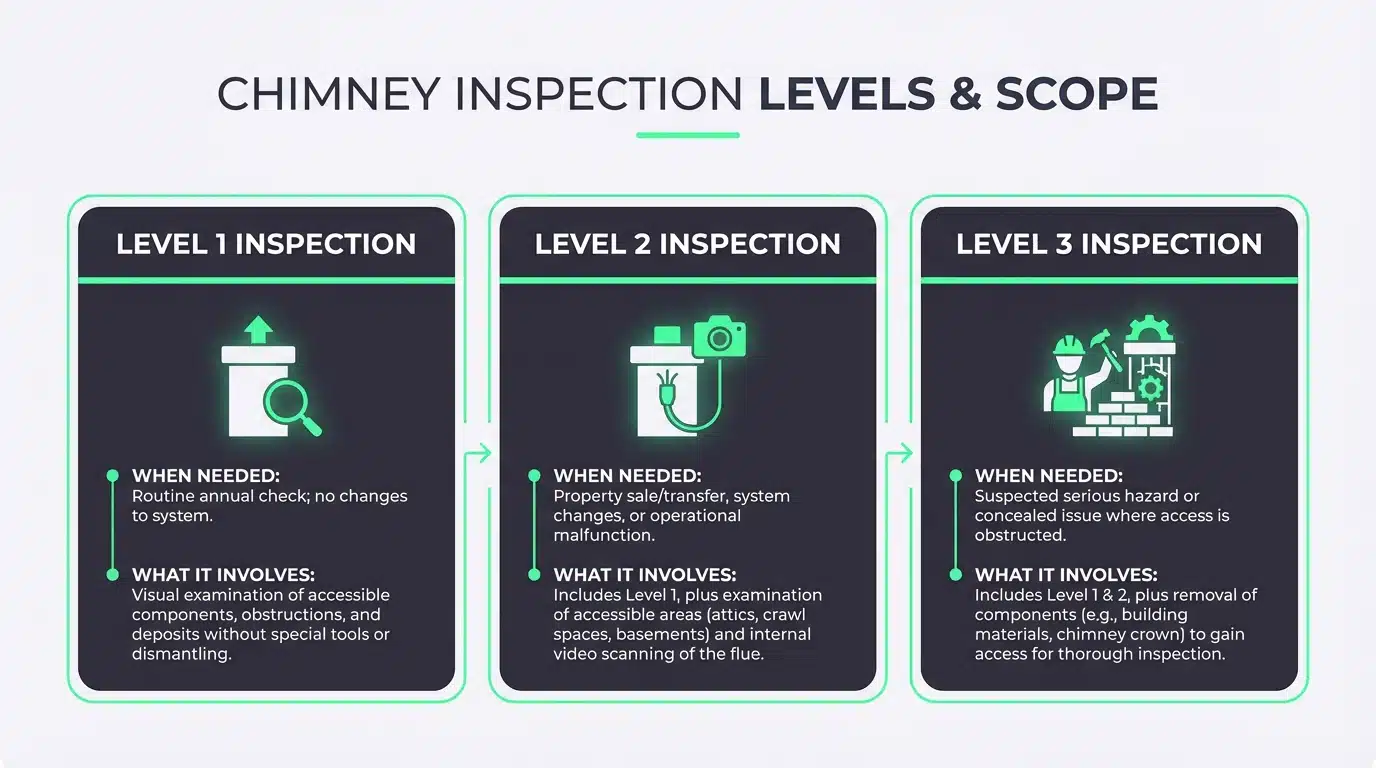
According to the CSIA, a standard chimney inspection in Houston typically begins at Level 1 or Level 2 depending on the home’s history and the reason for the inspection. If you are buying or selling a home, a Level 2 inspection is generally the recommended starting point. Chimney Sweep Pros Houston helps homeowners determine the appropriate level based on their specific situation, so you are not paying for more than you need or missing something that matters.
Is a Chimney Inspection the Same as Chimney Cleaning?
This is one of the most common points of confusion for homeowners. The short answer is no. An inspection is a diagnostic process designed to evaluate the condition and safety of the chimney system. Cleaning is a maintenance process focused on removing soot, creosote, debris, and blockages from the flue and firebox. They serve different purposes, though they are often performed together during the same service visit.
Understanding this distinction matters because some homeowners assume that getting a chimney cleaned means it has also been inspected for structural or safety issues. That is not always the case. A thorough inspection examines the chimney system beyond what cleaning alone addresses.
Did You Know?
The U.S. Fire Administration reports that failure to clean chimneys is the leading factor contributing to chimney fires. However, cleaning without an accompanying inspection can miss structural problems that create safety hazards beyond what soot and creosote removal can solve.
What Are the Warning Signs That You Need an Inspection Now?
Not every chimney problem announces itself with dramatic smoke or visible damage. Many issues develop gradually, and recognizing early warning signs can help you act before a minor concern becomes a costly repair or a safety hazard. If you notice any of the following, it is a practical idea to schedule a chimney inspection in Houston sooner rather than waiting for the next seasonal check.
Visible signs around the chimney or fireplace include cracked or spalling bricks, white staining on exterior masonry, rust on the damper or firebox, water stains on the ceiling or walls near the chimney, and deteriorating mortar joints. Performance-related signs include a weaker than normal draft, difficulty getting a fire started, smoke entering the room instead of venting upward, unusual odors coming from the fireplace even when it is not in use, and debris or animal sounds inside the flue.
If your indoor air quality seems to change when the fireplace is in use, the EPA notes that smelling smoke indoors can indicate that the chimney system is not functioning properly and recommends professional evaluation. This is particularly relevant in Houston, where homes are often tightly sealed for energy efficiency, which can affect how a chimney drafts.
A Scenario Most Houston Homeowners Do Not Expect: Problems Without Regular Use
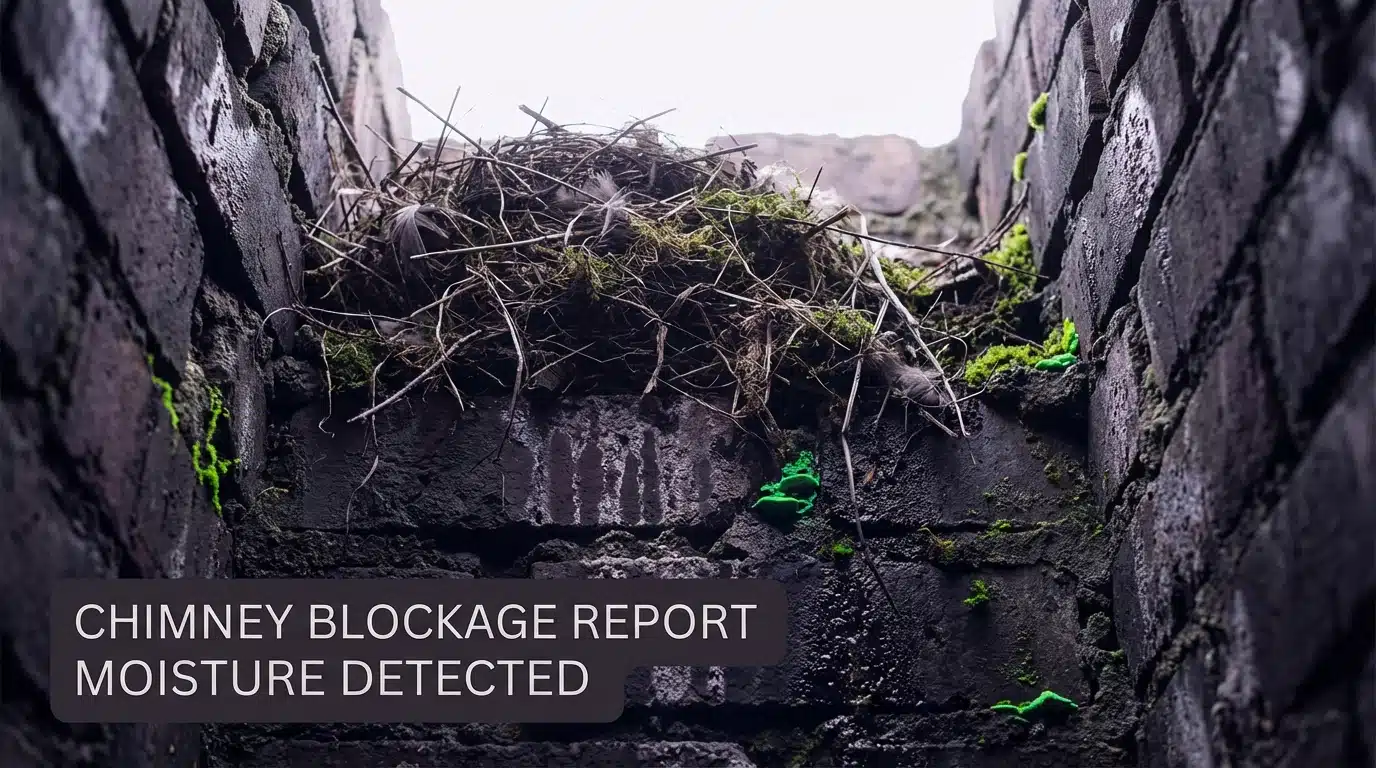
One of the most frequent questions in online homeowner discussions is whether a chimney inspection is necessary if the fireplace is rarely or never used. The answer surprises many people. A chimney that sits idle is not immune to problems. In fact, unused chimneys can develop issues that are just as serious as those in heavily used systems. Animals may nest inside the flue, creating blockages. Moisture can seep through a damaged cap or crown and slowly deteriorate the liner or masonry. Leaves, branches, and other debris can accumulate and restrict airflow.
In Houston’s climate, where humidity is consistently high and storms can be severe, an unused chimney is still exposed to the same weather conditions that affect the rest of the home. Without periodic inspection, these problems can go unnoticed until they cause water damage inside the home or compromise the chimney structure to the point where major repairs are needed.
Tip for Houston Homeowners
Even if you never light a fire, schedule an annual inspection. Animal nesting, moisture infiltration, and structural settling can create problems in any chimney, regardless of use. Catching these issues early is almost always less expensive than addressing the damage they cause over time.
How Houston’s Climate Complicates Chimney Maintenance
Houston is not a market where chimney issues are limited to the winter season. The combination of heat, humidity, heavy rainfall, and occasional severe weather events means that chimney components are under stress year-round. Masonry absorbs moisture, and when temperatures fluctuate, that moisture can cause cracking and spalling. Metal components like the cap, chase cover, and flashing are susceptible to rust and corrosion in a humid coastal environment.
Harris County fire safety guidance specifically emphasizes checking fireplace ventilation systems and ensuring carbon monoxide alarms are functional before any seasonal use of heating equipment. Scheduling a chimney inspection service in Houston TX before the first cold snap gives you time to address any issues that are identified before you actually need the fireplace. Chimney Sweep Pros Houston is familiar with the specific wear patterns that Houston’s climate creates, which means inspections are focused on the issues most likely to affect homes in this area.
How Much Does a Chimney Inspection Cost in Houston?
Cost is understandably one of the first things homeowners want to know. The honest answer is that it depends on several factors, and any company that quotes a flat price without knowing the details of your chimney system may not be giving you the full picture. Factors that can influence the cost of a chimney inspection in Houston include the type and size of the chimney system, the inspection level required, accessibility and chimney height, the current condition of the chimney, whether video scanning is needed, and whether cleaning or minor service is combined with the inspection.
Rather than focusing solely on the lowest price, it is worth understanding what is included in the service. A thorough inspection that identifies a developing moisture problem or a cracked flue liner can prevent repair costs that are many times the price of the inspection itself. Chimney Sweep Pros Houston provides clear explanations of what each inspection covers, so homeowners know what they are getting before the work begins.
Not sure which inspection level is right for your home?
Chimney Sweep Pros Houston will help you determine the appropriate scope based on your specific situation, so you only pay for what you actually need.
Common Mistake: Choosing an Inspector Based on Price Alone
Online discussions among homeowners reveal a recurring concern, and it is worth addressing directly. Some companies offer very low initial prices for a chimney inspection, only to follow up with aggressive upselling of repairs that may or may not be necessary. This creates understandable skepticism among homeowners who just want honest, straightforward information about the condition of their chimney.
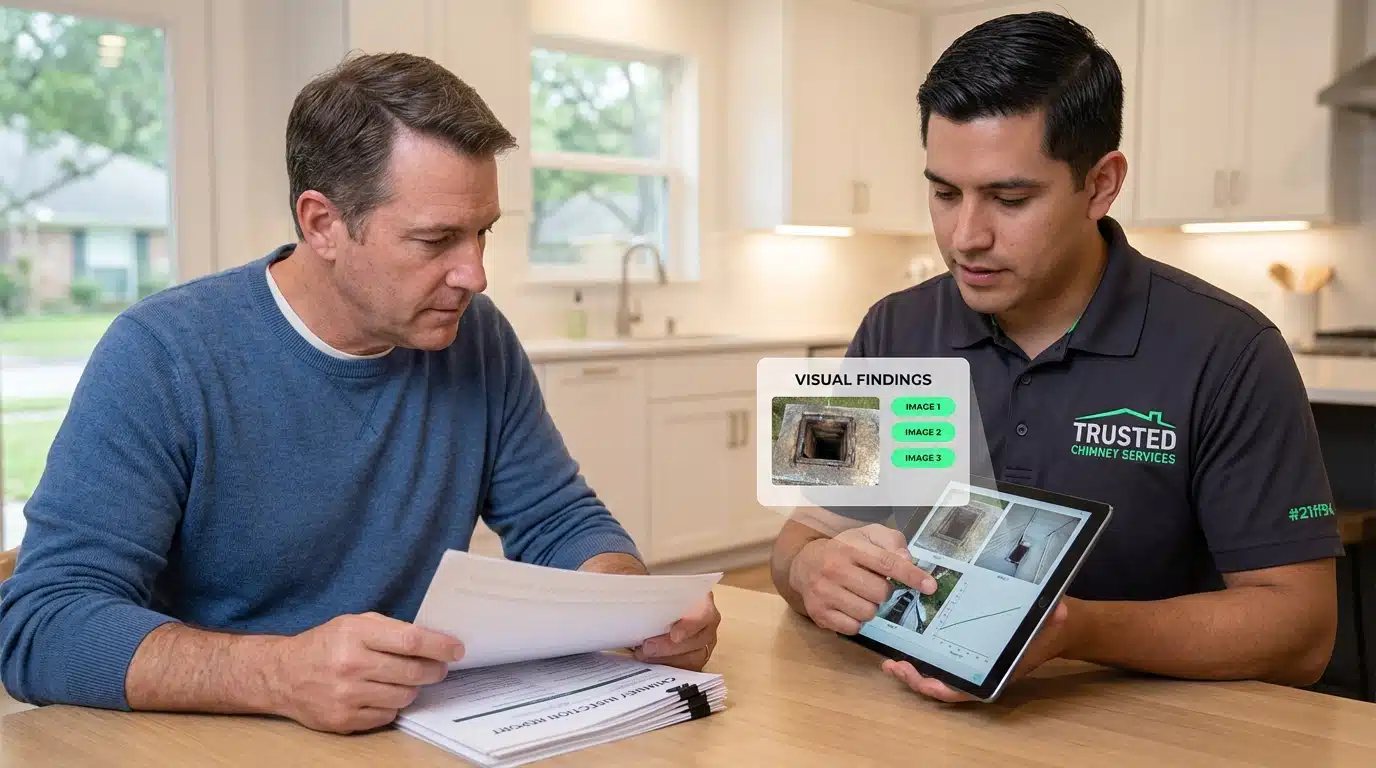
The way to avoid this situation is to work with a company that explains findings clearly, shows you what they are seeing, and gives you practical options rather than pressure. A dependable chimney inspection service in Houston TX should leave you feeling more informed, not more confused. Chimney Sweep Pros Houston approaches every inspection with the goal of giving homeowners a clear picture of their chimney’s condition and straightforward recommendations for any next steps.
What Happens If a Chimney Fails Inspection?
Hearing that your chimney has a problem can feel alarming, but not every finding is an emergency. Inspection results typically fall into a spectrum, from minor maintenance items to issues that should be addressed before the next use of the fireplace. Understanding the difference helps you make calm, informed decisions.
Minor Issues vs. Urgent Safety Concerns
Minor findings might include light creosote buildup that calls for cleaning, small mortar cracks that should be monitored, or a cap that is showing early signs of wear. These are normal maintenance items that can usually be scheduled at your convenience. More urgent findings could include significant flue liner damage, large cracks in the firebox, evidence of a previous chimney fire, or blockages that present a carbon monoxide risk. In these cases, the recommendation is typically to avoid using the fireplace until expert chimney repair services have addressed the problem.
The goal of a professional inspection is not to generate fear or unnecessary repair work. It is to give you an accurate assessment so you can prioritize what matters and plan accordingly. A good inspector will explain what they found, why it matters, and what your options are in plain language.
Creosote, Carbon Monoxide, and Chimney Fires: The Hazards an Inspection Helps Catch
Three words come up repeatedly in chimney safety discussions, and for good reason. Creosote is a highly flammable byproduct of burning wood that accumulates on the interior walls of the flue over time. According to the EPA, this substance can ignite under the right conditions and is a leading contributor to chimney fires. A professional chimney inspection identifies creosote buildup levels and determines whether cleaning is needed to reduce fire risk.
Carbon monoxide is an odorless, colorless gas that can enter the home when a chimney system is not venting properly. Blocked flues, cracked liners, and poor draft conditions can all contribute to carbon monoxide backdrafting into living spaces. The Consumer Product Safety Commission emphasizes that fuel-burning appliances and their venting systems should be maintained and inspected regularly to reduce this risk. NFPA data further show that confined chimney and flue fires represent a significant share of residential heating-related fire incidents nationally.
Did You Know?
Carbon monoxide is responsible for hundreds of deaths and thousands of emergency room visits in the United States each year. A properly inspected and maintained chimney system is one of the most effective ways to reduce this risk in homes with fireplaces or wood-burning appliances.
How Long Does a Chimney Inspection Take?
Most homeowners want to know what kind of time commitment to expect. For a standard Level 1 inspection, the visit is relatively brief. The duration can extend if a Level 2 inspection with video scanning is required, if the chimney is in poor condition and requires more detailed evaluation, or if the homeowner has questions they would like answered during the visit. Factors such as chimney height, accessibility, and the number of flues in the home can also influence how long the process takes.
You do not typically need to do anything special to prepare, though it helps to clear the area around the fireplace and ensure the technician can access the chimney from the roof if needed. Chimney Sweep Pros Houston communicates what to expect before the appointment so homeowners can plan their day without surprises.
Should You Get a Chimney Inspection Before Buying a House?
If you are purchasing a home in Houston that has a fireplace or wood-burning stove, a chimney inspection is one of the most practical additions to your pre-purchase due diligence. Standard home inspections often include only a surface-level look at the chimney system. A dedicated chimney inspection, particularly at Level 2, examines the flue interior, structural connections, and components that a general home inspector may not evaluate in detail.
Identifying chimney issues before closing gives you leverage to negotiate repairs or adjust your offer. More importantly, it helps you avoid moving into a home with a chimney system that is not safe to use. This is a step that costs relatively little compared to the potential expense of discovering hidden damage after the sale is complete.
Ready to Find Out What Condition Your Chimney Is In?
Whether it is your annual check, a pre-purchase inspection, or a concern that needs attention, Chimney Sweep Pros Houston provides thorough, honestly explained inspections for homeowners across the Houston area.
Schedule Your Inspection Online
Or call directly: (713) 936-5535
Frequently Asked Questions About Chimney Inspection in Houston

About Chimney Sweep Pros Houston
Chimney Sweep Pros Houston provides professional chimney inspection, cleaning, and repair services to homeowners across the Houston metropolitan area. Every inspection is conducted with the goal of giving homeowners a clear, honest assessment of their chimney system’s condition along with straightforward recommendations. To learn more or schedule service, visit chimneysweepproshouston.com or call (713) 936-5535.