Imagine settling into your Houston home on one of those rare cool evenings, ready to light the fireplace for the first time in months, only to notice a strange odor drifting into the room or smoke that refuses to vent properly. These are scenarios that play out in households across the Greater Houston area every year. A professional chimney inspection helps identify hidden hazards before they become serious safety concerns or expensive repairs. Whether your fireplace runs on wood or gas, understanding the condition of your chimney system is a practical step toward safer, cleaner, and more dependable fireplace performance. This guide walks through what a chimney inspection service in Houston, TX actually involves, why it matters in the local climate, and how to know when it is time to schedule one.
Estimated Reading Time: 12 Minutes
Key Takeaways
- Annual chimney inspections are recommended by national fire safety organizations and the Texas Department of Insurance, regardless of how often you use your fireplace.
- Houston’s high rainfall, humidity, and seasonal temperature swings accelerate chimney deterioration even when the fireplace sits idle.
- Creosote buildup and blocked flues are leading causes of chimney fires and carbon monoxide risks in residential homes.
- Warning signs like unusual odors, smoke entering the room, white staining on bricks, and crumbling mortar demand prompt professional evaluation.
- Scheduling inspections in late summer through early fall helps avoid the seasonal rush and ensures your system is ready before the first cold front.
- A general home inspection does not replace a dedicated chimney inspection, which evaluates the flue liner, damper, smoke chamber, and internal structural components.
Protect your Houston home with a professional chimney inspection. Do not wait for warning signs to become costly repairs.
Essential Safety and Your Chimney Inspection Service Houston TX
Houston homeowners often assume that because the fireplace gets limited use compared to colder regions, their chimney can go years without attention. That assumption is one of the most common mistakes in local home maintenance. The U.S. Consumer Product Safety Commission recommends annual professional inspections for all fuel-burning appliances, including fireplaces and their venting systems, to help prevent fire and carbon monoxide hazards. The Texas Department of Insurance echoes this guidance, advising at least one professional cleaning and inspection per year.
Local humidity, seasonal temperature swings, and heavy rainfall create conditions that wear on chimney components even when the fireplace sits idle. A chimney inspection in Houston is not just about checking for soot. It is about evaluating the entire system, from the cap at the top to the firebox at the bottom, for signs of moisture intrusion, structural shifts, and blockages that can compromise safety. When buildup is found, the next step often involves professional chimney sweeping and cleaning to restore the system to a safer operating condition.
Chimney Sweep Pros Houston provides thorough, locally focused inspection services designed to address the specific challenges Houston chimneys face. Every inspection includes a clear explanation of findings and practical recommendations, so homeowners understand what their chimney needs without guesswork.
Why a Professional Chimney Inspection Is Non-Negotiable
Creosote is a byproduct of burning wood. As smoke rises through a cooler flue, it condenses and deposits a tar-like residue along the interior walls. According to the U.S. Environmental Protection Agency, this buildup is a leading cause of chimney fires. Heavy creosote accumulation can ignite under high temperatures, and the resulting fire can damage the flue liner, compromise masonry, and spread to surrounding structures.
Beyond creosote, a professional chimney inspection evaluates structural integrity. Cracked mortar joints, deteriorating brickwork, a damaged crown, or a missing chimney cap can each allow water, debris, and even animals into the flue system. The U.S. Fire Administration classifies a chimney or flue fire as Incident Type 114, a formal recognition that these events represent a real and documented risk category in residential fire reporting. When an inspection reveals cracks or masonry damage, timely chimney repair services in Houston can help correct the problem before it escalates.
Preventing Carbon Monoxide Risks in Houston Homes
Carbon monoxide is colorless and odorless. A blocked flue, a cracked liner, or a malfunctioning damper can allow this gas to accumulate inside the home instead of venting safely outdoors. The Houston Fire Department warns that fireplaces produce carbon deposits and advises homeowners to maintain working carbon monoxide alarms. The Texas Department of State Health Services adds that CO poisoning symptoms, including headaches, dizziness, and nausea, are often mistaken for other illnesses, making prevention through inspection far more reliable than relying on symptoms alone.
A professional chimney inspection in Houston includes checking the draft path, the damper operation, and the condition of the flue liner. These are the components that determine whether combustion gases exit your home or linger inside it. For homes where the fireplace has not been used in a while, this check is especially important because deterioration can occur silently over time.
Did You Know?
The U.S. Fire Administration formally classifies chimney and flue fires under Incident Type 114. Carbon monoxide from a malfunctioning chimney system is colorless and odorless, meaning you cannot detect it without a working CO alarm or a professional inspection confirming your flue is venting properly.
The Impact of Houston’s Climate on Your Chimney
Houston is not a city most people associate with chimney problems, but its climate is actually one of the toughest on chimney systems in the country. According to the National Weather Service, Houston averages over 51 inches of rainfall annually. That volume of water, combined with persistent humidity, accelerates the deterioration of masonry, mortar, metal flashing, and chimney crowns.
Moisture penetrates small cracks in the crown or gaps in the flashing and works its way into the chimney structure. Over freeze-thaw cycles, even mild ones, this moisture expands and contracts, widening cracks and loosening mortar joints. Inside the flue, moisture can corrode metal liners and promote mold growth. None of these issues announce themselves loudly. They develop gradually, which is why an annual chimney inspection is the most reliable way to catch them before they lead to costly structural repair or unsafe operating conditions.
What Happens if You Skip Chimney Inspection?
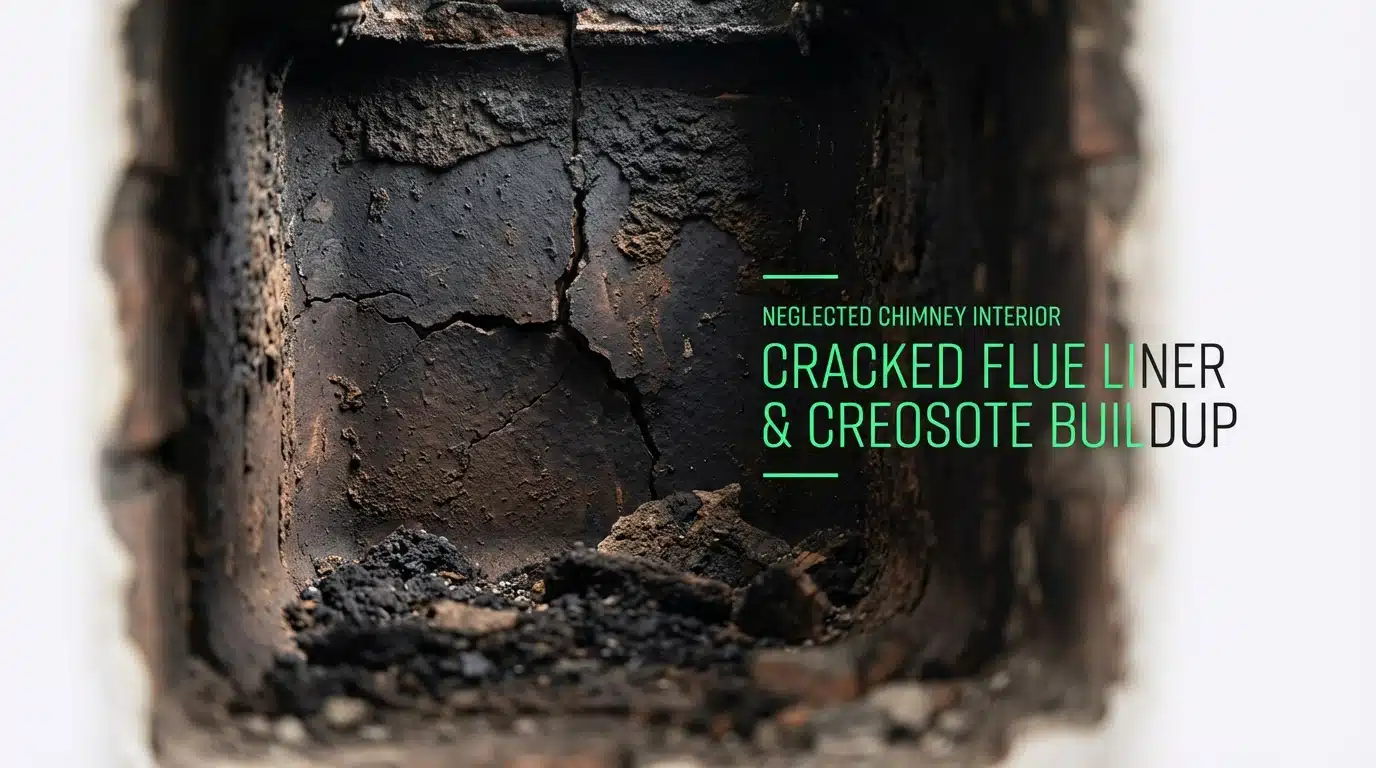
Skipping even one annual inspection might seem harmless, but the consequences can compound quickly. A small crack in the flue liner that goes unnoticed one year can become a significant structural failure the next. Creosote that measures a thin glaze in year one can progress to a dangerous, thick coating by year two if the fireplace is used regularly. Blockages from animal nests or fallen debris can restrict airflow enough to push smoke and gases back into the living space.
From a financial perspective, the cost of a routine inspection is a fraction of what emergency repairs, liner replacement, or full masonry restoration might require. Homeowners who skip inspections frequently find themselves facing repair bills that could have been avoided with a simple annual check. There is also the matter of home insurance. Some policies require documentation of regular chimney maintenance, and a lapse could complicate a claim if a chimney-related incident occurs.
Tip for Houston Homeowners
Keep a record of every chimney inspection and service visit. This documentation can be valuable for home insurance claims, resale disclosures, and tracking the long-term condition of your chimney system.
How Do You Know If Your Chimney Needs Inspection?
Some warning signs are obvious, while others require a trained eye. The clearest indicators include a strong or unusual odor coming from the fireplace, visible soot or debris falling into the firebox, smoke that does not vent upward as expected, or water stains on the ceiling or walls near the chimney. Exterior signs such as crumbling mortar, leaning brickwork, a rusted or missing chimney cap, and white staining on the masonry also point to problems that need professional evaluation.
Common Warning Signs Houston Homeowners Should Not Ignore
Even without visible symptoms, any chimney that has gone more than a year without professional evaluation deserves attention. Chimney Sweep Pros Houston uses a detailed assessment process that covers every accessible component, ensuring homeowners receive an honest picture of their chimney’s condition.
What to Expect During a Professional Chimney Inspection
The National Fire Protection Association, referenced through the Chimney Safety Institute of America, states that chimneys should be inspected annually for soundness and freedom from deposits. A standard inspection typically begins with a visual examination of the exterior, including the chimney cap, crown, flashing, and visible masonry. The technician then moves inside to assess the firebox, damper, smoke chamber, and the accessible portions of the flue liner.
If the initial examination reveals signs of internal damage or heavy buildup, a more detailed evaluation using a video camera may be recommended. Camera inspections allow the technician to see inside the flue where visual access is otherwise impossible, identifying cracks, gaps, blockages, or liner deterioration that would remain hidden during a standard visual check.
Do Camera Inspections Help Find Hidden Damage?
Yes. Video scanning is one of the most effective tools for evaluating the internal condition of a chimney. A small camera is inserted into the flue and provides real-time footage of the liner surface, joints, and any obstructions. This is particularly useful for older Houston homes where the chimney may have decades of undocumented wear. It is also valuable after weather events that may have introduced water or shifted structural components. During inspections, technicians sometimes discover nests or blockages from raccoons, birds, or squirrels, situations that require chimney animal removal before the system can be safely used again.
A Scenario That Illustrates Why Timing Matters
Consider a Houston homeowner who purchased a home three years ago. The home inspection at the time noted the fireplace as “functional.” No dedicated chimney inspection was performed. The homeowner used the fireplace a handful of times each winter without incident. In the fourth year, they notice a faint musty smell near the hearth and a slight discoloration on the wall above the mantel.
A professional chimney inspection reveals that the crown has a hairline crack that has allowed moisture to seep into the flue for at least two seasons. The flue liner shows early-stage corrosion. The damper is stiff from rust. None of these issues were dangerous enough to cause an immediate event, but left unaddressed for another year or two, they could have led to a liner failure, interior water damage, or a situation where combustion gases were no longer venting properly. The repair cost at this stage is manageable. Waiting longer would have changed that equation significantly.
Do not let small chimney problems turn into expensive emergencies. A professional inspection gives you clear answers and a plan of action.
Should Chimney Inspection and Chimney Cleaning Be Done Together?
Inspection and cleaning serve different purposes, but they complement each other well. An inspection is a diagnostic process. It identifies what condition the chimney is in. Cleaning is a maintenance process. It physically removes soot, creosote, debris, and obstructions from the flue and firebox. In many cases, performing both during the same service visit is the most efficient approach, particularly if the chimney has been in regular use or has not been serviced in over a year.
That said, not every inspection leads to cleaning. If the chimney has minimal buildup and no obstructions, the technician may recommend waiting until the next scheduled visit. Chimney Sweep Pros Houston provides honest assessments on whether cleaning is necessary at the time of inspection, so homeowners are never paying for services they do not need.
Comparing Inspection Frequency Based on Usage Patterns
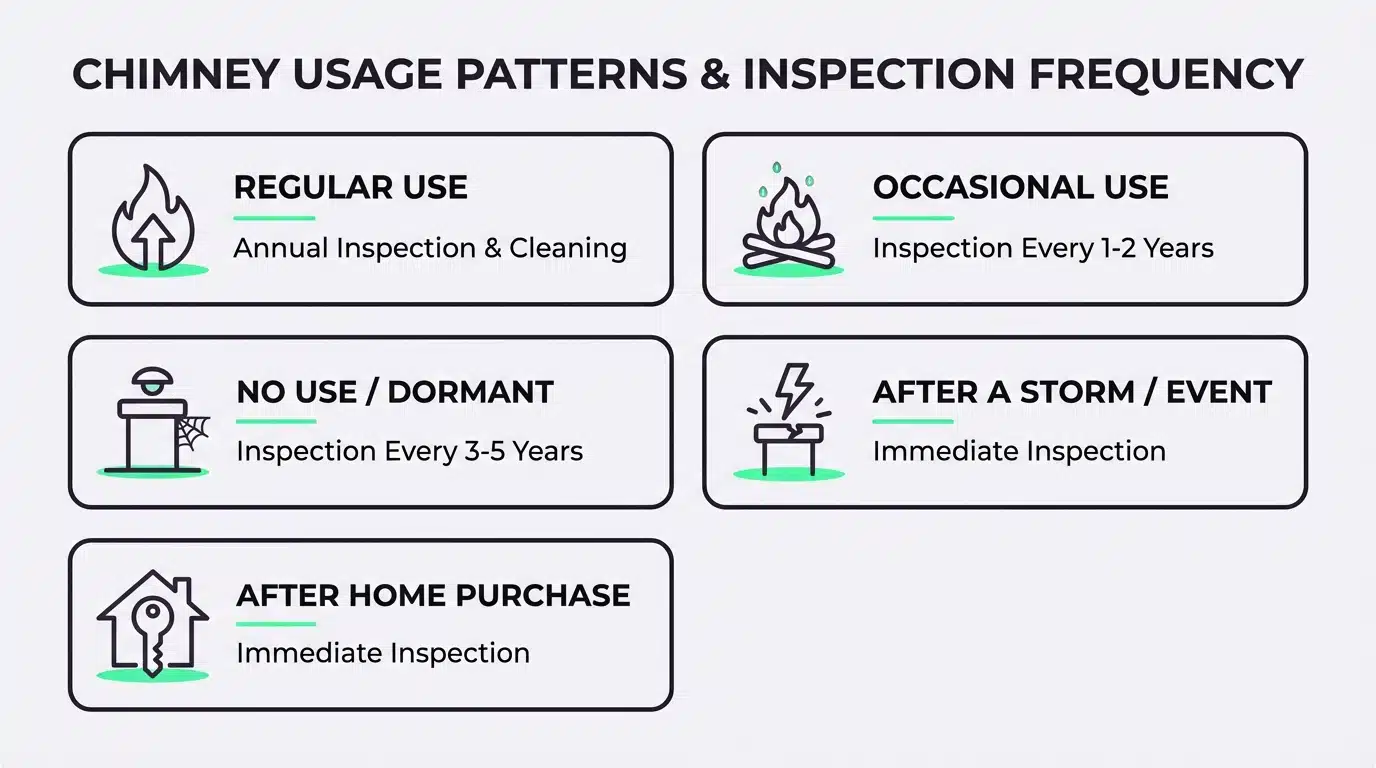
When Is the Best Time to Book a Chimney Inspection in Houston?
The ideal window is late summer through early fall, before the first cool front of the season arrives. Scheduling during this period means any issues can be identified and repaired before you need the fireplace. It also means you avoid the rush that many chimney service companies experience once temperatures drop and demand spikes. For homeowners who missed the fall window, a post-season inspection in early spring is the next best option. This allows time to address any wear or damage from the past season before Houston’s heavy rain and humidity take their toll over the summer months.
The Houston Fire Department encourages homeowners to treat the start of fireplace season the same way they treat checking smoke alarms and carbon monoxide detectors: as a routine safety step that protects the household. Chimney Sweep Pros Houston makes scheduling straightforward, with flexible appointment options that work around busy Houston lifestyles.
Five Mistakes Houston Homeowners Make with Chimney Maintenance
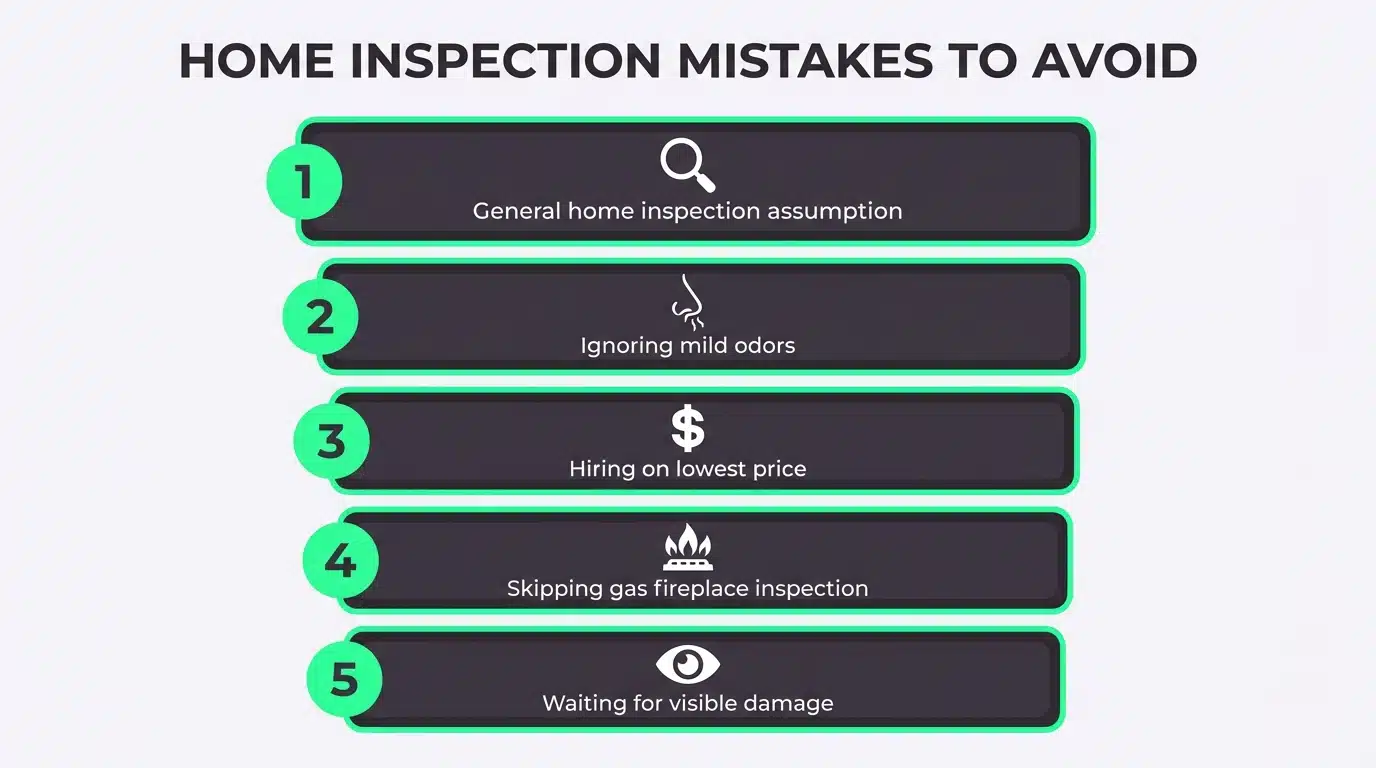
Assuming a general home inspection covers the chimney in detail. Most home inspectors perform only a visual check and do not evaluate the interior of the flue or the condition of the liner. A dedicated chimney inspection is a separate and more thorough process.
Ignoring mild odors or slight draft changes. These early signals often indicate the beginning of a problem that will worsen with time. Addressing them early is far less expensive and disruptive than waiting.
Hiring based solely on the lowest price. An unusually low inspection fee sometimes means a cursory check rather than a comprehensive evaluation. It is worth asking what the inspection includes before booking.
Skipping inspection because the fireplace is gas. Gas fireplaces produce less creosote, but they still require venting, and their chimney components are subject to the same moisture and corrosion risks as wood-burning systems.
Waiting for visible damage before calling a professional. By the time damage is visible from the outside, the internal condition may already be significantly compromised.
Tip
When scheduling an inspection, ask the provider to explain exactly what their service covers. A thorough inspection should include the chimney cap, crown, flashing, exterior masonry, firebox, damper, smoke chamber, and accessible flue liner. If they cannot detail the scope, consider another provider.
What Chimney Sweep Pros Houston Brings to the Inspection Process
Chimney Sweep Pros Houston approaches every inspection with a focus on thoroughness and honest communication. The team evaluates each component of the chimney system methodically, from exterior masonry and cap condition down through the flue, smoke chamber, damper, and firebox. Findings are explained in plain language so homeowners understand exactly what is happening with their chimney and what steps, if any, are recommended next.
The company serves homeowners across the Houston area and understands the specific challenges that local climate and building styles present. Whether you are dealing with an aging chimney on a historic home or a relatively new system that has never been inspected, the approach is the same: practical, professional, and focused on helping you maintain a safer and better-performing chimney.
Ready to Find Out What Condition Your Chimney Is In?
If your Houston home has a fireplace that has not been professionally inspected in the past year, or if you have noticed any of the warning signs discussed above, now is a practical time to schedule a chimney inspection.
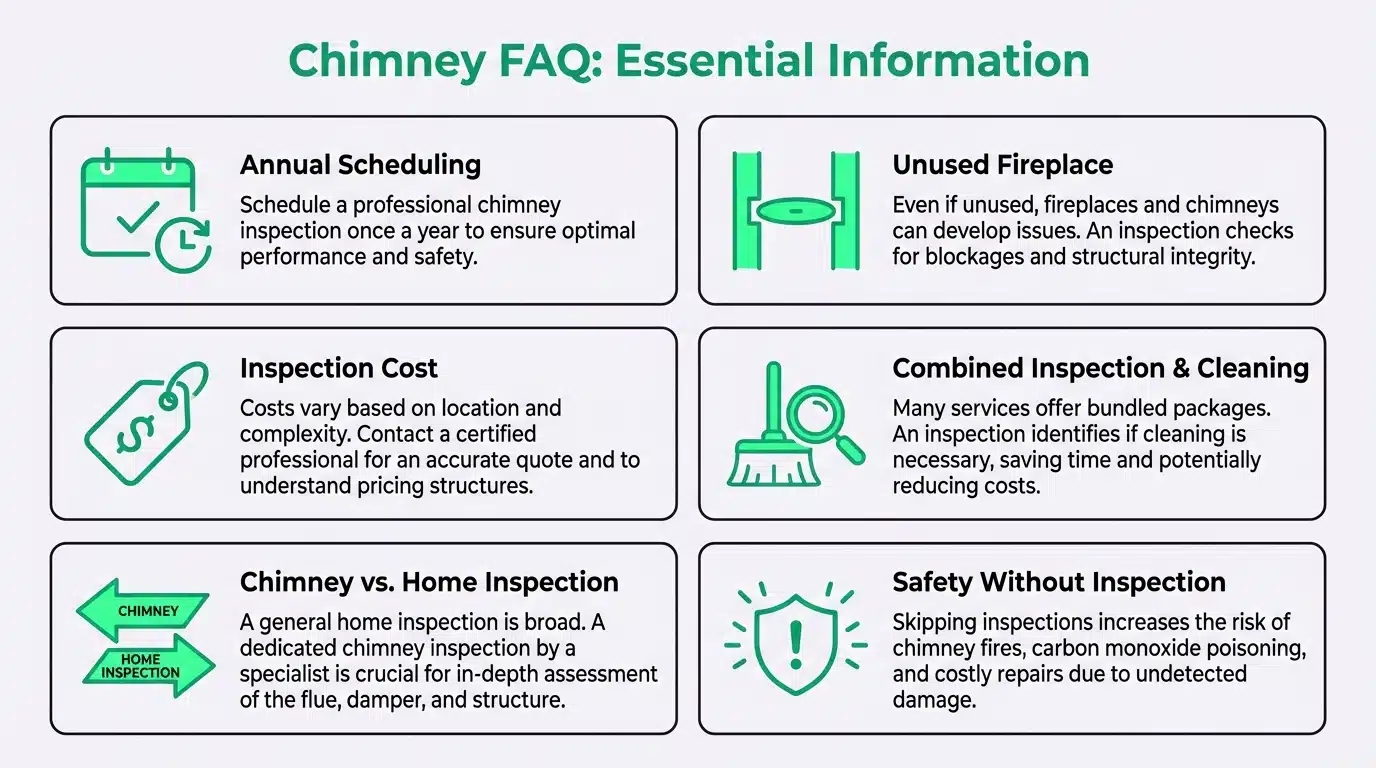
Frequently Asked Questions About Chimney Inspection in Houston

About the Author
Chimney Sweep Pros Houston
Chimney Sweep Pros Houston provides professional chimney inspection, cleaning, repair, and animal removal services to homeowners across the Greater Houston area. The team is committed to honest assessments, clear communication, and helping Houston residents maintain safer, better-performing chimney systems. Learn more at chimneysweepproshouston.com or call (713) 936-5535.